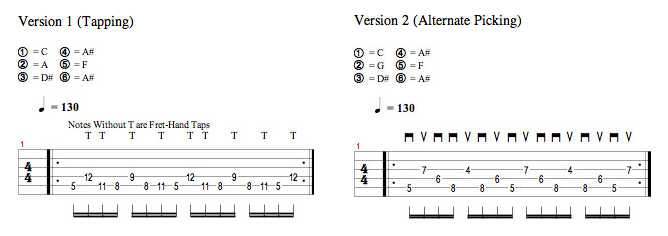
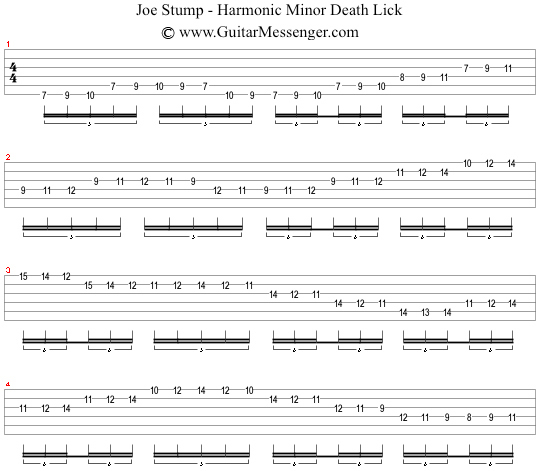
Jamming With Eric Krasno
July 16th, 2010 in Artist Masterclasses by Ivan Chopik| Get the Flash Player to see this player. |
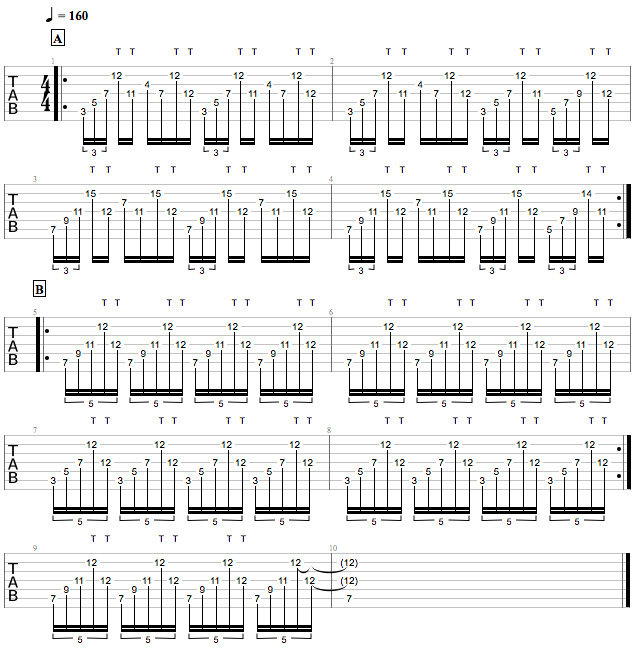
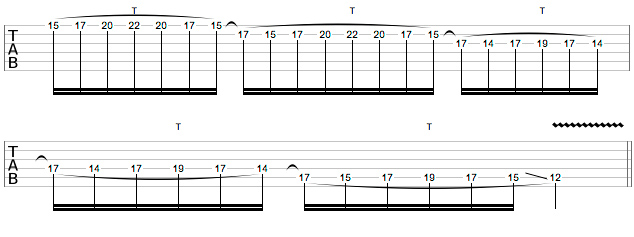
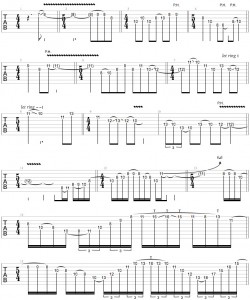
In the following examples, Eric demonstrates his dynamic style while improvising over two stellar grooves.
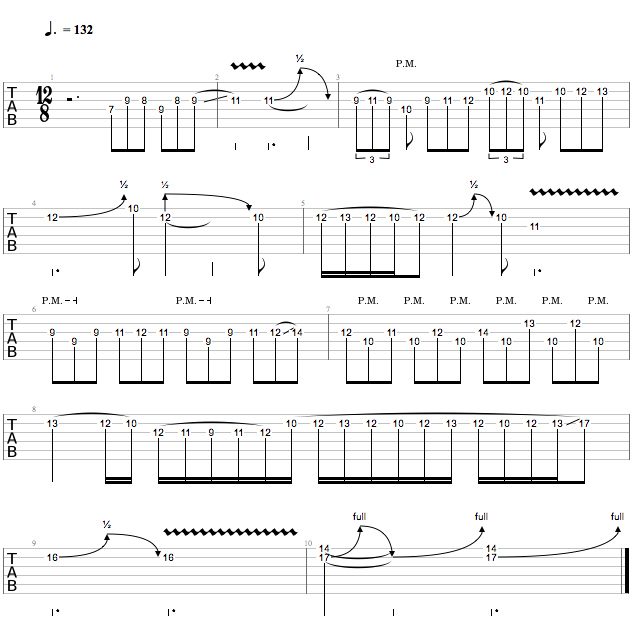
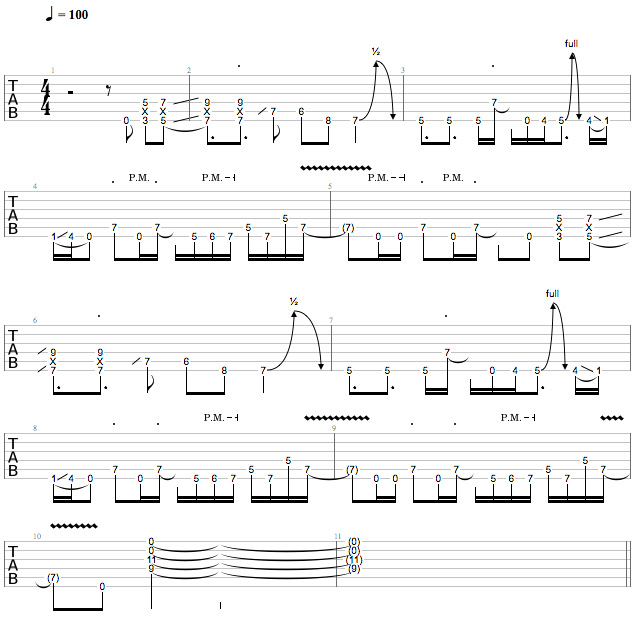
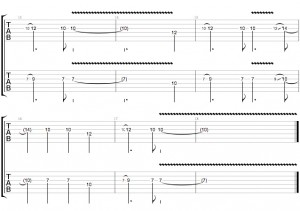
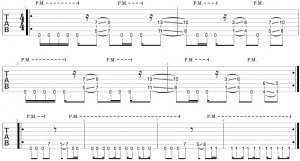
Interlude (Soulive - Break Out, 2005)
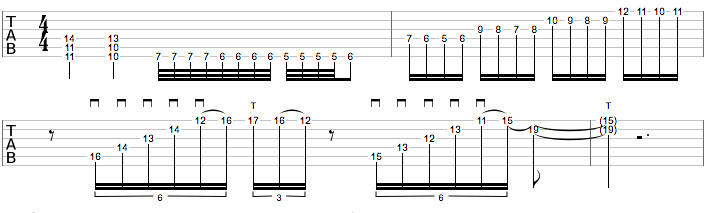
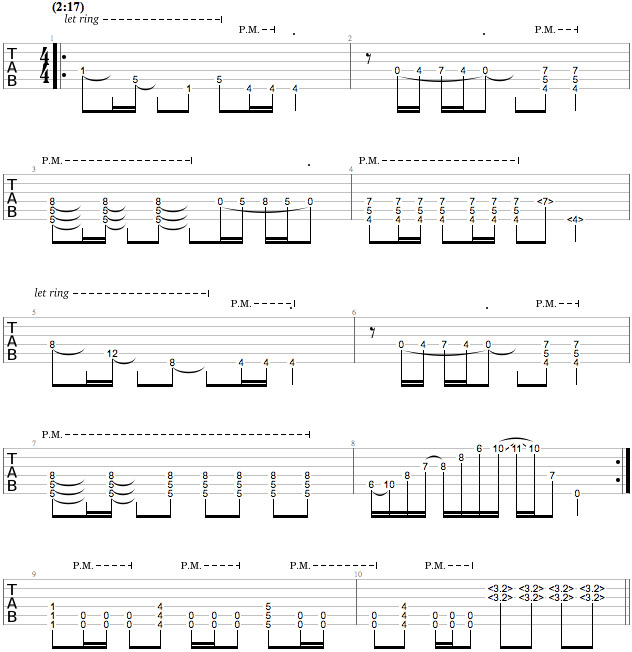
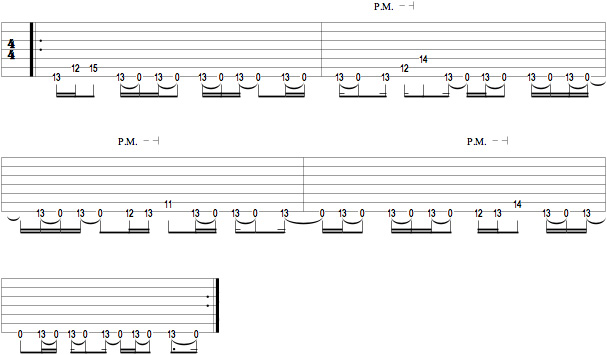
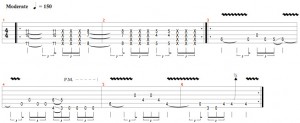
This first riff is taken from ‘Interlude,’ the opening track from Soulive’s 2005 release Break Out. Be sure to lay back on the beat – as usual, Krasno’s excellent timing and articulations turn this harmonically simple riff into an essay on groove.
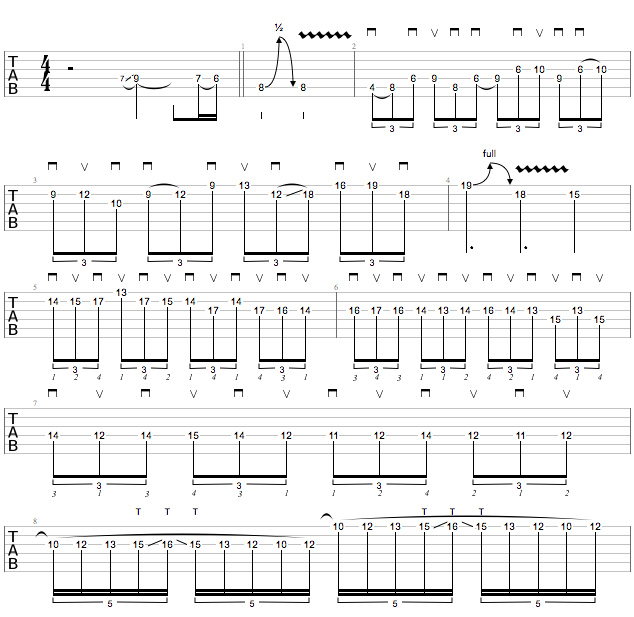
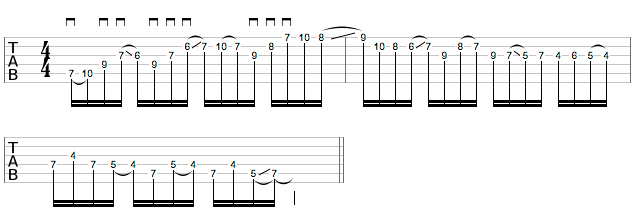
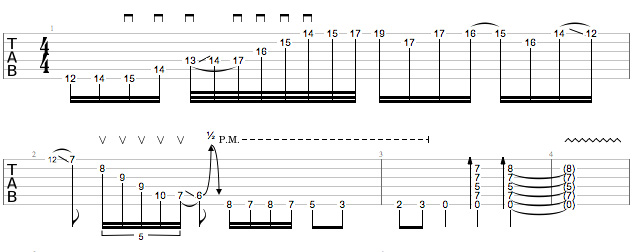
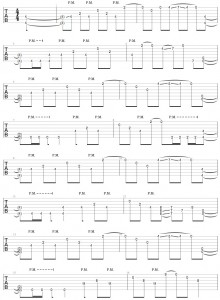
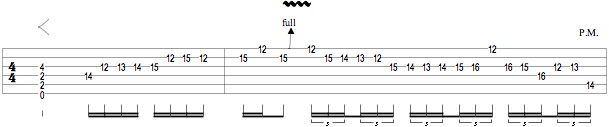
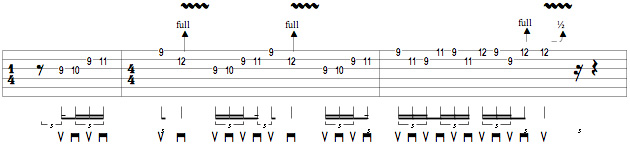
Up And Out (Eric Krasno - Reminisce, 2010)
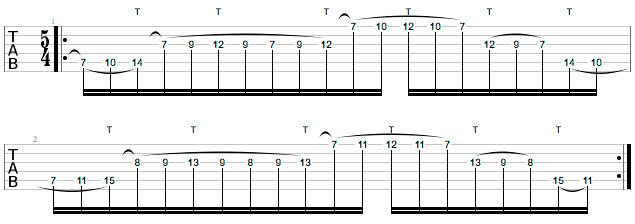
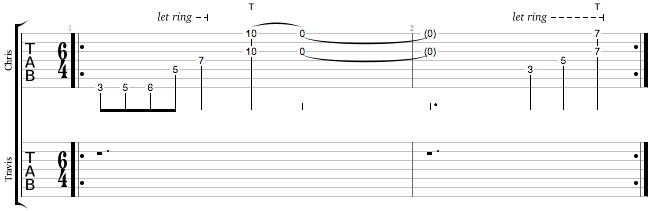
The two chords from the main vamp of ‘Up And Out,’ from Krasno’s solo album Reminisce, lay the groundwork for the shifting leads that dominate the track. Since the chords don’t fit neatly into one key, this progression calls for two separate soloing approaches, which Eric demonstrates in this video.

Periphery: Misha Mansoor Masterclass (Part 2)
April 24th, 2010 in Artist Masterclasses by admin| Get the Flash Player to see this player. |
[Note: Guitar Messenger provided Misha with a POD X3 Live processor for his guitar tones and a Vox AC DA5 amp for monitoring. In this video Misha is playing his Blackmachine Guitar tuned to Drop-C and using Dunlop Jazz III Ultex picks.]
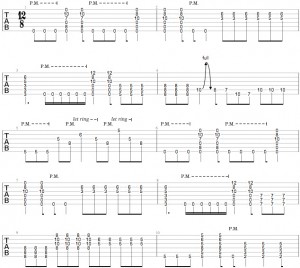
Insomnia
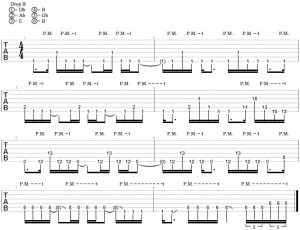
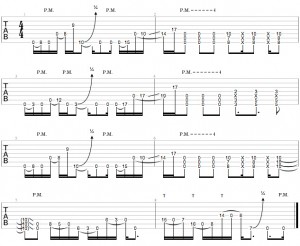
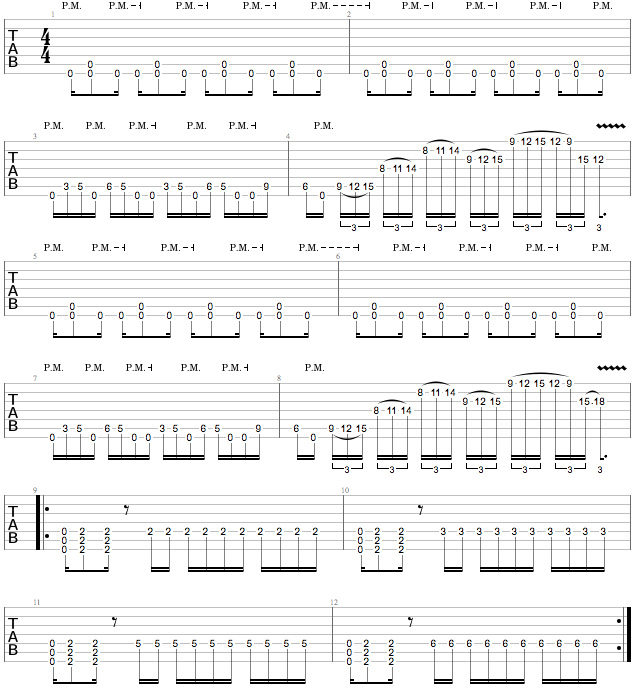
This is sort of a triplet riff – it dances you around the pulse. It’s funny, it sounds kind of like Terminator. It’s one of the two riffs that we get called for being Terminator rip-offs, and you know what? I’m fine with that, because Terminator fuckin’ rules. But you have to sort of imagine ‘1-2-3, 1-2-3…’
Audio clip: Adobe Flash Player (version 9 or above) is required to play this audio clip. Download the latest version here. You also need to have JavaScript enabled in your browser.


So it’s kind of playful – it plays around the beat a little bit.
Racecar
[Note: Racecar is performed on a 7-string using "Tosin Tuning" tuned 1/2 step down: Bb Db Ab Db Gb Bb Eb. In the masterclass video Misha performs excerpts from Racecar on his 6-string in Drop-C tuning.]
We tried [Tosin Tuning] for that song, and it’s really cool. When you change the relationships of the strings, you can do some insane moves and you end up with some really cool riffs. So you can play drop D songs in that tuning. And the midsection of that song goes into this sort of rock feel for a little bit:
Audio clip: Adobe Flash Player (version 9 or above) is required to play this audio clip. Download the latest version here. You also need to have JavaScript enabled in your browser.


One goal that I have with my music – it’s up to you to decide whether I’ve failed or succeeded at this – but we’re definitely trying to write interesting, proggy chord changes that we have sing-along choruses to, that have catchy vocal lines. It’s very, very hard to find that line that works for that reason. You usually end up with stuff that works, but doesn’t necessary fit very well. But I really like the part that we wrote for that, and it took a little bit of working out, because it is not a very obvious chord progression.
Audio clip: Adobe Flash Player (version 9 or above) is required to play this audio clip. Download the latest version here. You also need to have JavaScript enabled in your browser.

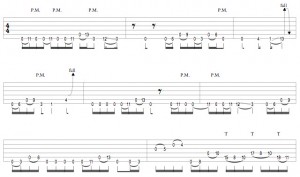
AGCFAD Tuning & Zyglrox
This tuning is actually an interesting tuning. For those of you who don’t know what tuning it is – we normally tune [our 6-strings] to CGCFAD, and this is AGCFAD. I was in Mauritius on vacation, visiting my parents, and I had a 6-string there, and this was my way of getting extended range on a 6-string. It’s the same relationship of strings as if you had a 7-string missing that sixth string. So you have an octave [between the open sixth string, and the second fret of the fifth string].
Audio clip: Adobe Flash Player (version 9 or above) is required to play this audio clip. Download the latest version here. You also need to have JavaScript enabled in your browser.

**Very special thanks to C-Rob and Phil of Infinite Descent for their assistance in shooting this feature, C-Rob for making a kick-ass video intro, and Nolly of Red Seas Fire for providing the spot-on transcriptions of Insomnia and Zyglrox**
Periphery: Misha Mansoor Masterclass (Part 1)
April 24th, 2010 in Artist Masterclasses by admin| Get the Flash Player to see this player. |
[Note: Guitar Messenger provided Misha with a POD X3 Live processor for his guitar tones and a Vox AC DA5 amp for monitoring. In this video Misha is playing his Blackmachine Guitar tuned to Drop-C and using Dunlop Jazz III Ultex picks.]
Djent
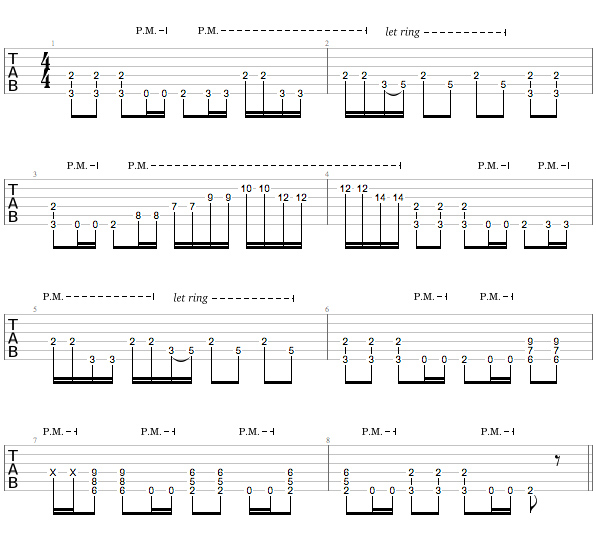
One big thing we get asked a lot is what ‘djent’ is – and it is djent. The ‘d’ is indeed silent. We didn’t invent it, Meshuggah did. I just use it because it’s a way to describe a sound. It’s when you do a four-note power chord – which I like because it sounds very metallic and aggressive. Since we play in drop it would be 0-0-0-2.

As opposed to regular chug chords, which would be like a [two or three-note] power chord. So you get a super metallic sound, and I like gear that it enhances that or is conducive to that sound. That’s while you’ll always hear me saying that I like something that’s djenty. As I said, I did not invent it – I’m just using a word that I heard someone else say, because it is the best way to describe it [laughs]. It just sounds like it – it’s an onomatopoeia. Just to clear that little thing up there.
Chords
I do like very rich chords. I try to come up with chords that would be played [on instruments besides guitar], like piano, so I end up stretching my fingers – I end up finding these extended chords. I do not know a thing about music theory, unfortunately, so I have no idea what these chords are called – maybe you can tell me. I just like it when… in my mind, it defines how it sounds. It makes it very specific as opposed to [plays power chord] That could be major or minor. There’s one chord which I really love, which I came up with for a song which will be a Periphery song eventually, called ‘Not Enough Mana.’ One of the riffs in the song [goes like this]:
Audio clip: Adobe Flash Player (version 9 or above) is required to play this audio clip. Download the latest version here. You also need to have JavaScript enabled in your browser.

I really like the relationship [of the sliding notes], and I wanted to transpose that. So I had to come up with a chord that could do that, and I came up with this bitch here [laughs]. Because then you can do the same notes.
Audio clip: Adobe Flash Player (version 9 or above) is required to play this audio clip. Download the latest version here. You also need to have JavaScript enabled in your browser.

It’s a very rich and defined chord. You need an amp that’s very midrangey, so you can hear all the notes. Then there’s the variation on it, which I guess would be the major version. I love that chord.

A variation on that is in a song I did called called ‘Heliovice.’
Audio clip: Adobe Flash Player (version 9 or above) is required to play this audio clip. Download the latest version here. You also need to have JavaScript enabled in your browser.

Buttersnips
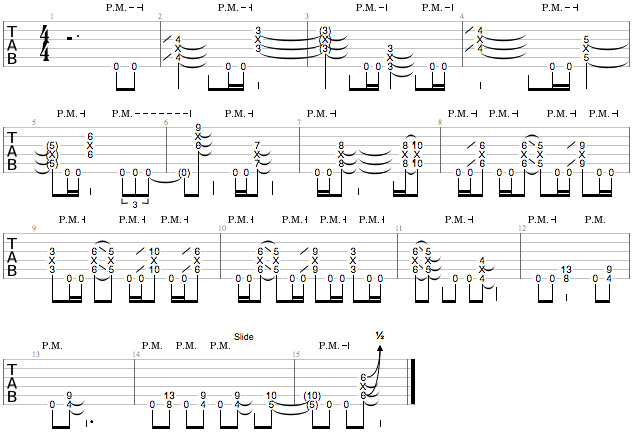
When I write riffs, I usually wait until I’m recording to figure out how it’s going to sound, but I usually have a bunch of moves that I want to work in – I’m sure a lot of people write like this. It makes it kind of fun, it makes it kind of spontaneous if you figure it out on the spot. It means that a lot of times your riffs will end up sounding different than maybe you thought they were going to sound like. I usually record all of my stuff to a pulse, because I like my stuff to groove. A lot of times it ends up in 4/4 – something you can bob your head to, and this is no exception:

I had this ambiguous-sounding scale thing, which is based around a pattern of five, where you go up a string and up a fret. There [on the B string], because of the relationship of the strings, you have to shift it over. Because you’re playing it against a pulse, it kind of dances around it. I wanted to work that move in as a theme with this other, more groovy [riff] – so it’s them fighting against each other in my head, fighting for the spotlight.
Audio clip: Adobe Flash Player (version 9 or above) is required to play this audio clip. Download the latest version here. You also need to have JavaScript enabled in your browser.
Then it goes into this weird bit – I don’t know why, just because. I do a lot of these hammer-on things, because they’re easier to do than alt. picking, and I’m not very good at alt. picking. So all of my stuff is stuff that sounds hard, but is easy to play [laughs]. It helps if you palm mute – you get that attack. Then tapping, and then the riff repeats like that.
Audio clip: Adobe Flash Player (version 9 or above) is required to play this audio clip. Download the latest version here. You also need to have JavaScript enabled in your browser.
This is something Tosin [Abasi of Animals As Leaders] showed me way back in the day, which is a cool idea – to have a chord and then tap around it. So it’s as if you had some weird capo on your guitar. [For the chorus] you do that chord that I showed you, and then tap on the 15th fret, then back to a variation on the first riff.
Audio clip: Adobe Flash Player (version 9 or above) is required to play this audio clip. Download the latest version here. You also need to have JavaScript enabled in your browser.

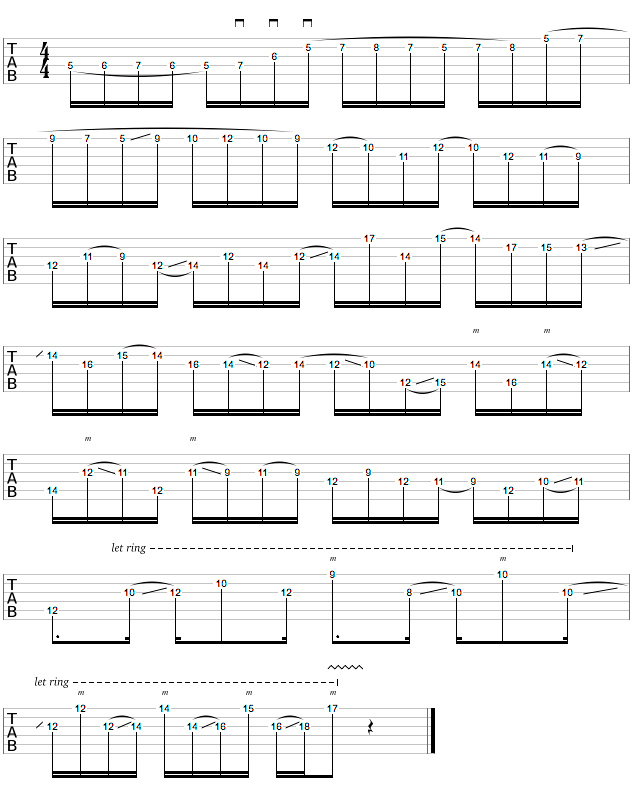
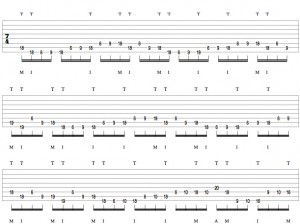
Another little lick in that song which is kind of cool is a tapping sort of breakdown. I use breakdown in the wrong sense – it’s not like a [plays chugging riff], it’s like a calm bit in the middle. I’m really bad with counting, so I actually don’t know what time signature that’s in – I know it’s not 4/4 because it’s kind of odd. The first half of it is odd, but the second half is in 4/4.
Audio clip: Adobe Flash Player (version 9 or above) is required to play this audio clip. Download the latest version here. You also need to have JavaScript enabled in your browser.

**Very special thanks to C-Rob and Phil of Infinite Descent for their assistance in shooting this feature, C-Rob for making a kick-ass video intro, and Nolly of Red Seas Fire for providing the flawless transcription of Buttersnips**
Steve Morse Masterclass
October 21st, 2009 in Artist Masterclasses by admin| Get the Flash Player to see this player. |
1. Improvisation
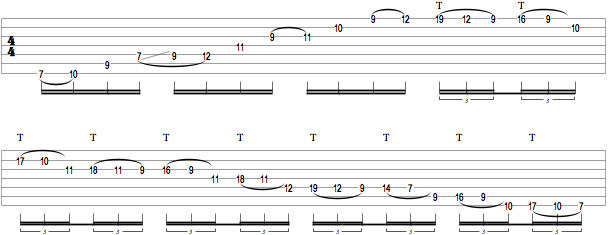
Steve Morse welcomes Guitar Messenger visitors with a stunning solo – in half a minute, he incorporates fierce pentatonic licks, chromatic bursts, harp harmonic arpeggios, wah-like tone knob swells, and subtle voice-led chords. Pay attention to Steve’s right hand throughout the solo – his even and aggressive pick attack is the key to making passages like the second line burst off the page.


2. Practice Routine
An excerpt from GM’s Steve Morse Interview:
IC: Do you still have a regular practice routine that you go through?
SM: Oh, yeah. My technique requires a lot of upkeep. So I do these kind of exercises:


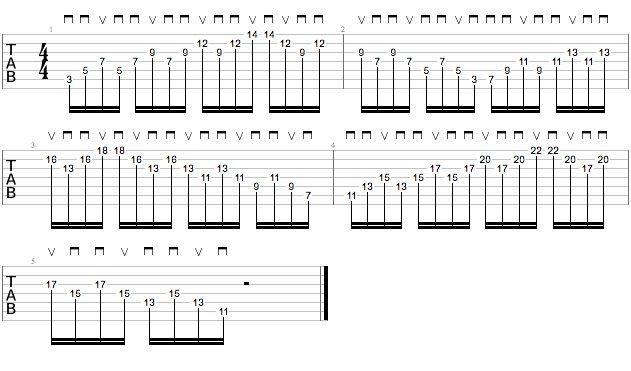
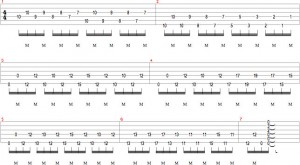
Then I do two-octave scales, six different ways. Let’s take mixo: First starting on a downstroke, and I alternate pick it, then starting with an upstroke. This is with the first and index finger, basically in the fifth position:


Now, I play the same scale starting on either the second or the third, depending on which scale [I’m playing]. Use one of the inside fingers – downstroke and then upstroke again:


Then switch to the fourth finger – this gives you three different positions. Then do it again with the upstroke:


So I do that up and down the neck a whole bunch of times – I spend about 30 or 40 minutes on just that, with rest periods, because that’s the way it is.
3. ‘Sometimes I Feel Like Screaming’ & Harp Harmonics
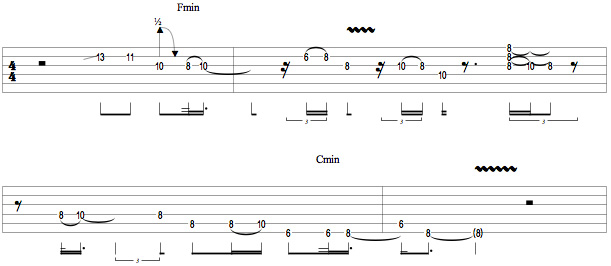
Here Steve shows us how to play the signature melody from Deep Purple’s ‘Sometimes I Feel Like Screaming’ off of their 1996 album Purpendicular, and explains the harp harmonic technique he uses to play it:
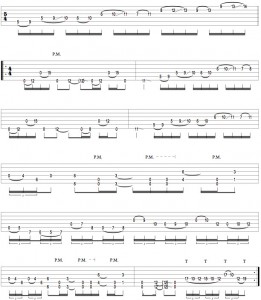
SM: The technique that I use is with second finger and thumb, and then I stop the string with my first finger. Put your finger over the fret wire – not in the middle between the fret wires, like you would if you were fretting. Actually touch it right over the fret wire and lift at the same time you pick.
Original melody in Dm and modulation into Gm:

Original melody and transposition up one octave:
The second time I’m fretting it in Gm, and you’re hearing it an octave higher. Since I’m fretting it in Gm, I’ve gone up a fourth, and playing the harmonic seven frets up gives me an octave and a fifth above that. So the fourth and fifth gives you an octave, and then the octave – so you’re two octaves up. If you miss a note [while sounding the harmonic seven frets above it] you’re going to get a wrong note – instead of hearing a D, you’re going to hear a G, so it’s going to be weird. So choose your time carefully to use that.


Steve Morse Bonus: Gear Gallery
October 20th, 2009 in Artist Masterclasses by adminSteve Morse’s live rig from the Out Standing In Their Field tour. These pictures were taken on October 20th, 2009 in Boston, Massachusetts.
Click on the thumbnails below to view the full-size images:
Steve Morse’s Complete Rig
Steve Morse’s Signature Engl Amps
Steve Morse’s Rack Gear
Steve Morse’s Pedalboard
Steve Morse’s Picks
Dave Martone Masterclass
January 17th, 2009 in Artist Masterclasses by adminIn his masterclass lesson, Dave Martone demonstrates his unique approach to two of his favorite techniques: tapping and hybrid picking. He also teaches part of “Nail Grinder” from his latest album, Clean, which features a guest solo from Joe Satriani. Be sure to check out Dave’s video below to catch the techniques and nuances involved in performing these examples. Also check out GuitarMessenger.com’s exclusive interview with Dave Martone!
| Get the Flash Player to see this player. |
Ex. 1A
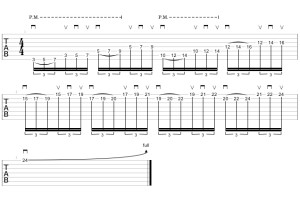
Here Dave uses a D# Locrian fingering to demonstrate one of his favorite tapping patterns: Low-High-Low-Mid-High-Mid. Make sure you have both the scale and tapping pattern under your fingers before tackling the last two examples.

Ex. 1B

Ex. 1C

Ex. 1D

Ex. 2A-B
Dave brings his tapping approach to several octaves of diagonal A Major arpeggios.

Ex. 2C

Ex. 2D

Ex. 2E

Ex. 2F

Ex. 3A

Ex. 3B
Here the Low-High-Low-Mid-High-Mid pattern is applied to a D Major 7th arpeggio.

Ex. 4A

Ex. 4B
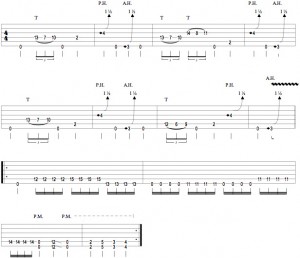
Tune your low E string down to D for the hybrid-picked main riff to “Nail Grinder.”

Ex. 4C

Ex. 5A
Dave uses hybrid picking to add color to an E Minor Pentatonic and an E Mixolydian scale.

Ex. 5B

Ex. 5C

Ex. 5D

Ex. 5E

Opeth: Mikael Åkerfeldt Masterclass
May 31st, 2008 in Artist Masterclasses by adminMikael Åkerfeldt discusses and demonstrates several of Opeth’s songs, as well as his approaches and techniques behind these songs and his overall chord and soloing style.
| Get the Flash Player to see this player. |
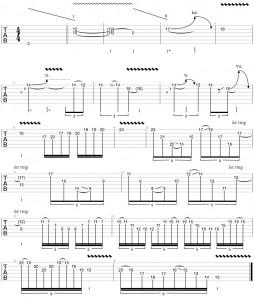
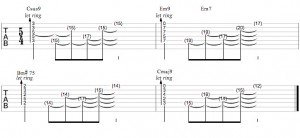
Some chords commonly used by Opeth:
The Lotus Eater
A)
B)
© ‘The Lotus Eater’ written by Mikael Åkerfeldt
Opeth: Bonus – Mikael Åkerfeldt’s Gear
May 30th, 2008 in Artist Masterclasses by admin| Get the Flash Player to see this player. |
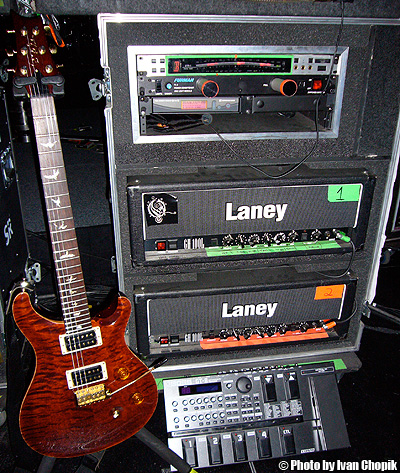
Very special thanks to Coty Allinson, Opeth’s guitar technician, who was kind enough to walk us through Mikael Åkerfeldt’s live guitar rig.

Click on the thumbnails below to view the full-size images:
Boss GT-8
Opeth’s Guitars
Laney Amplifiers
Killswitch Engage: Learn to Play ‘This Fire Burns’
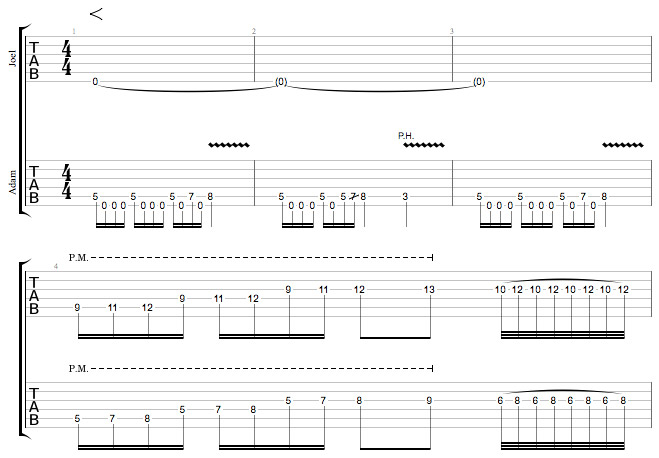
January 21st, 2008 in Artist Masterclasses by adminAdam D. and Joel Stroetzel of Killswitch Engage show you how to play ‘This Fire Burns’ from the WWE Wreckless Intent soundtrack.
| Get the Flash Player to see this player. |
Killswitch Engage: Learn to Play ‘Holy Diver’
January 21st, 2008 in Artist Masterclasses by adminAdam D. and Joel Stroetzel teach you how to play their cover of Dio’s classic ‘Holy Diver.’
| Get the Flash Player to see this player. |


Killswitch Engage: Metal Moo Cows, Foghorns, and Elephants
January 21st, 2008 in Artist Masterclasses by adminAdam D. and Joel Stroetzel demonstrate how to create the wonderful noises of Metal Moo Cows, Foghorns, and even Elephants!
| Get the Flash Player to see this player. |
Job For A Cowboy: Riffing Style
December 21st, 2007 in Artist Masterclasses by adminGuitarists Bobby Thompson and Ravi Bhadriraju of Job For A Cowboy demonstrate their death metal riffing techniques.
| Get the Flash Player to see this player. |