Contact   |   Staff  |   Contribute  |   Advertise  |   Site Map  |   Legal

Stepping Out: A Guide To Playing Outside (Part 1)

Lessons > Lessons

Stepping Out: A Guide To Playing Outside (Part 1) Stepping Out: A Guide To Playing Outside (Part 1)
By Thomas Williams

December 23rd, 2011

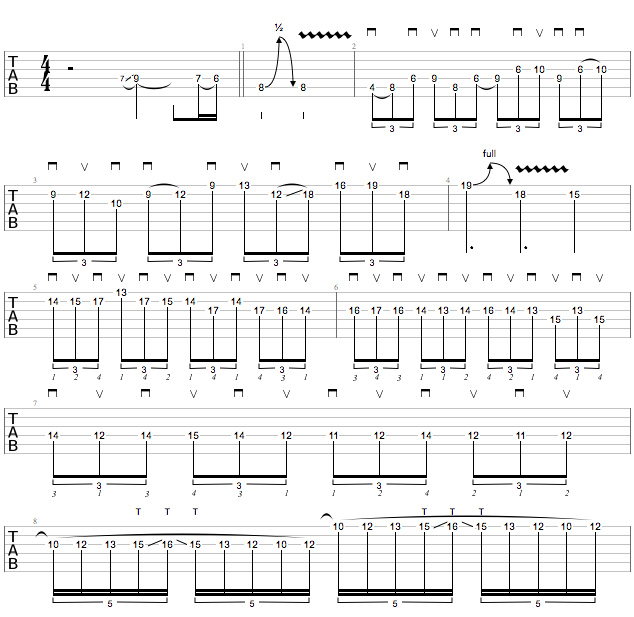
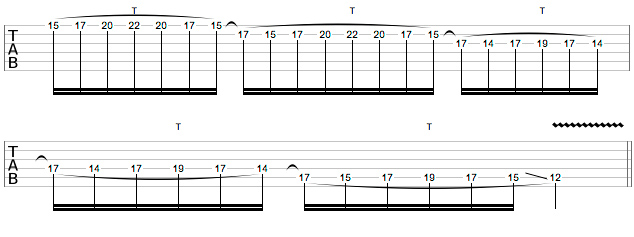
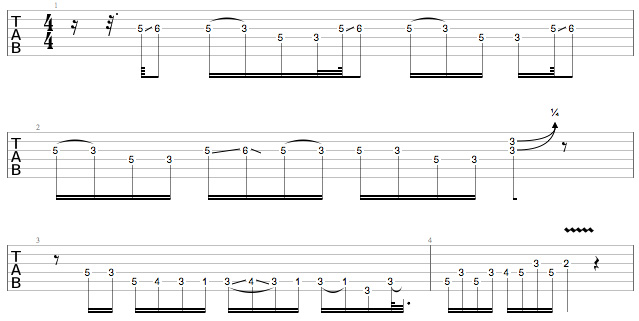
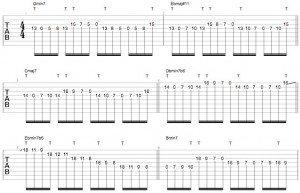
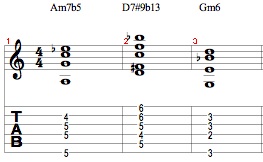
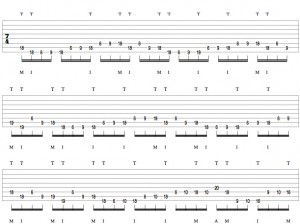
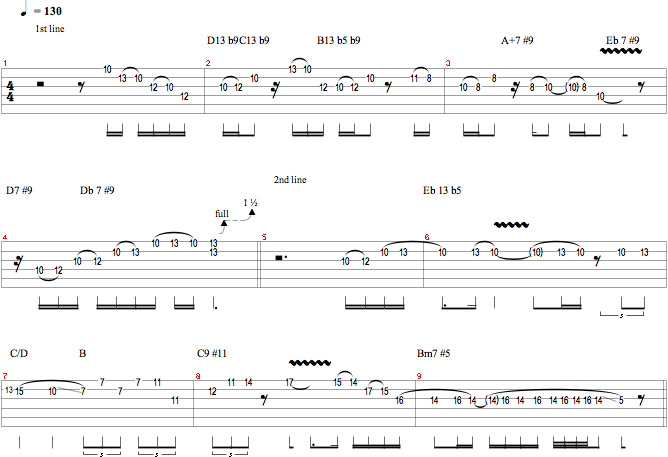
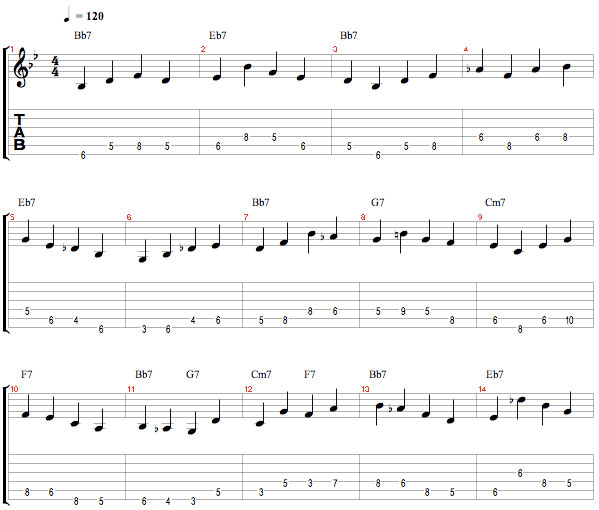
INTRODUCTION Playing ‘outside’ is a term synonymous with jazz rock/fusion guitar players. Within traditional forms of jazz this term is replaced by ‘using chromaticism.’ In blues, country, and folk forms it’s called ‘blue notes.’ In everything else it’s considered ‘the wrong notes.’ In all forms, however, the common goal is to play a note that clashes against the background harmony in order to create tension and thus reinforce resolution when it arrives. By definition, this could mean anything that is not heard in the chord – even notes that we consider as extensions, derived from chord scales. We must therefore… (Continue)


Metal Foundations Lesson 3: Intermediate Riff Concepts Metal Foundations Lesson 3: Intermediate Riff Concepts
By Zach Pino

October 11th, 2011

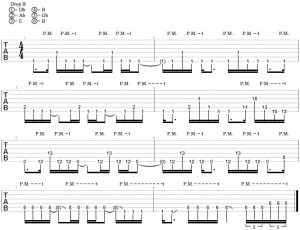
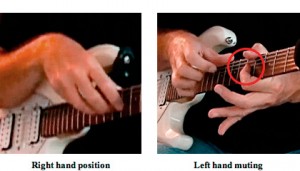
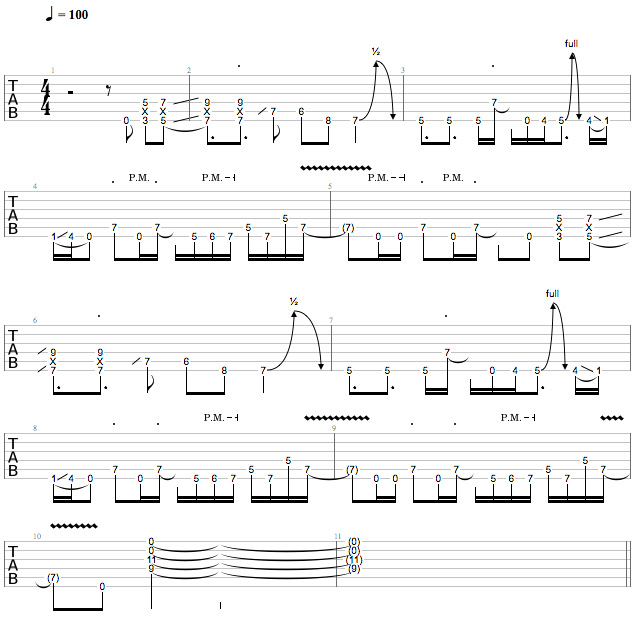
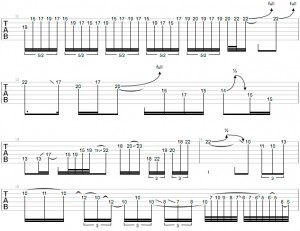
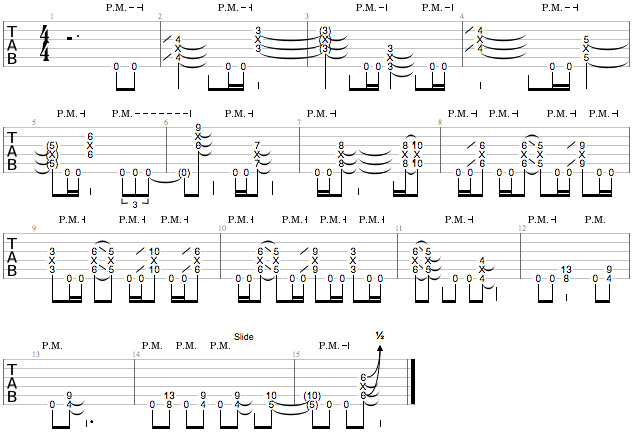
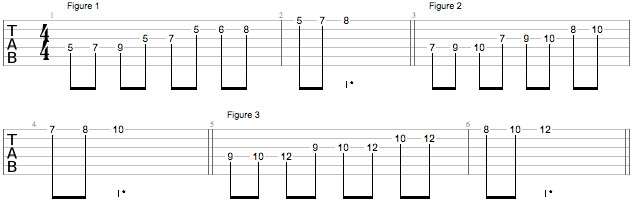
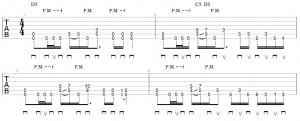
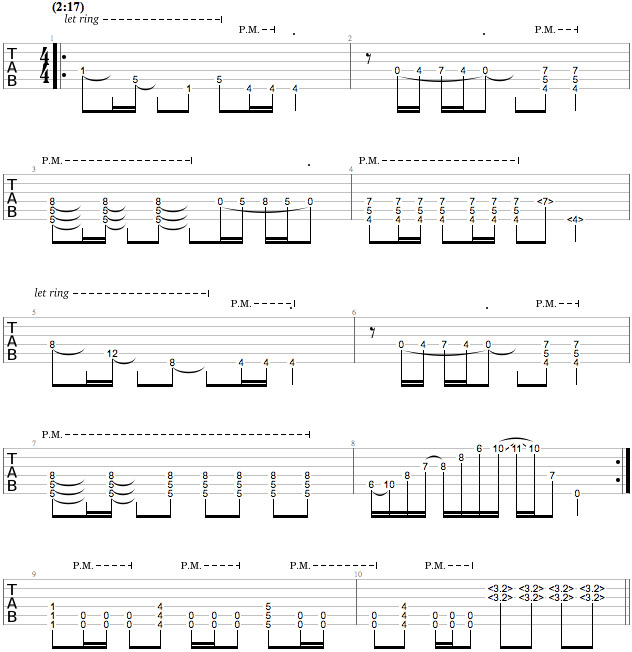
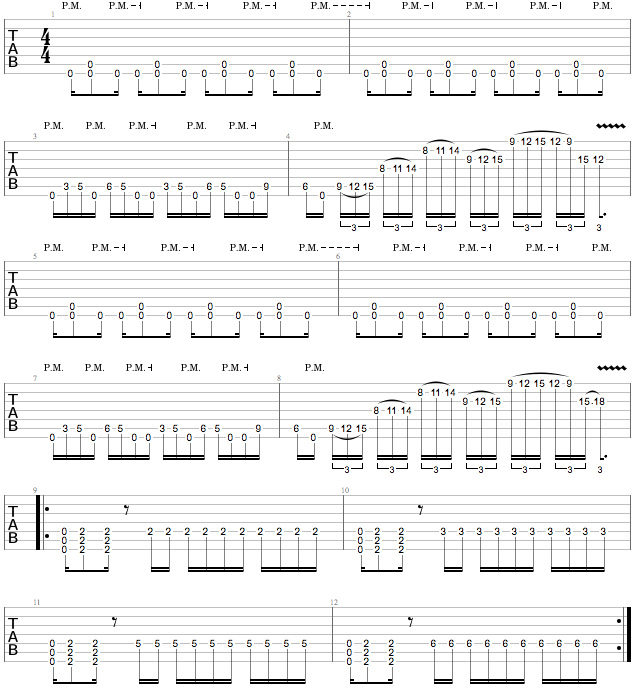
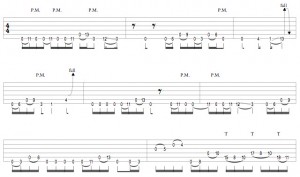
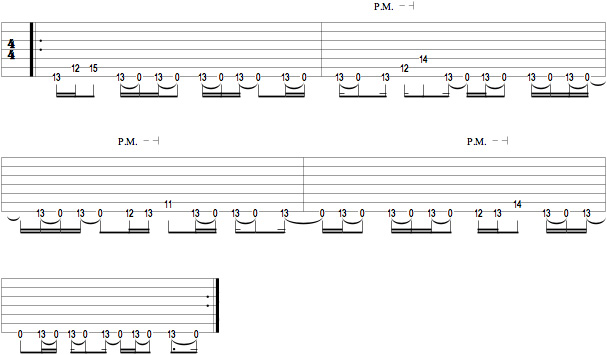
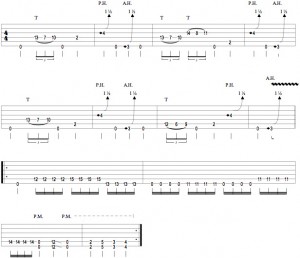
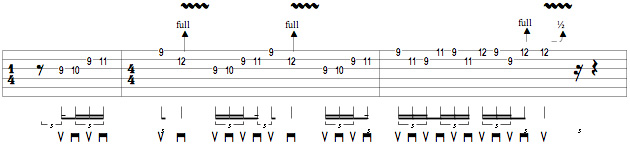
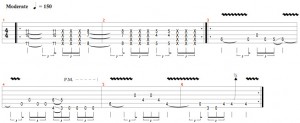
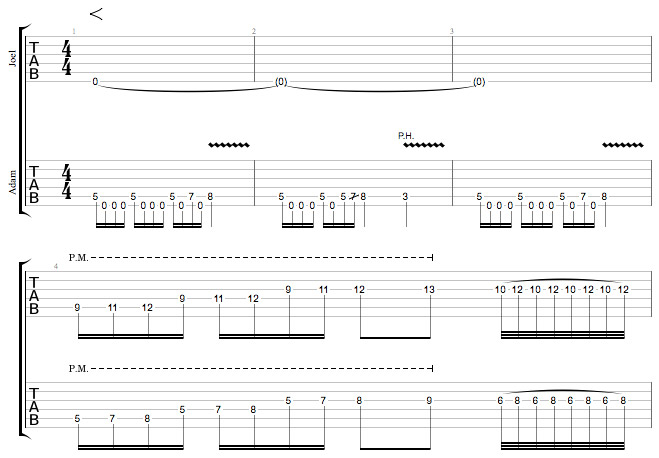
Welcome back, metal Guitar Messengers! The last lesson introduced you to some basic riff construction concepts based off of common chord diads and the palm muting technique. In this lesson, we’re going to dive right into some more advanced riff concepts. These include the use of tritones, bending techniques, and the use of palm-muted rests to create syncopated grooves. The riffs in this lesson are all in Drop D tuning, with the exception of Figure 3, which is in standard tuning. And as always, we’ll conclude the lesson with some essential metal albums that illustrate these concepts. Sound good? Let’s… (Continue)


Arbitrary Chromatics: The Bonehead Easy Way To Get A Jazzy Sound Arbitrary Chromatics: The Bonehead Easy Way To Get A Jazzy Sound
By Morten Faerestrand

September 28th, 2011

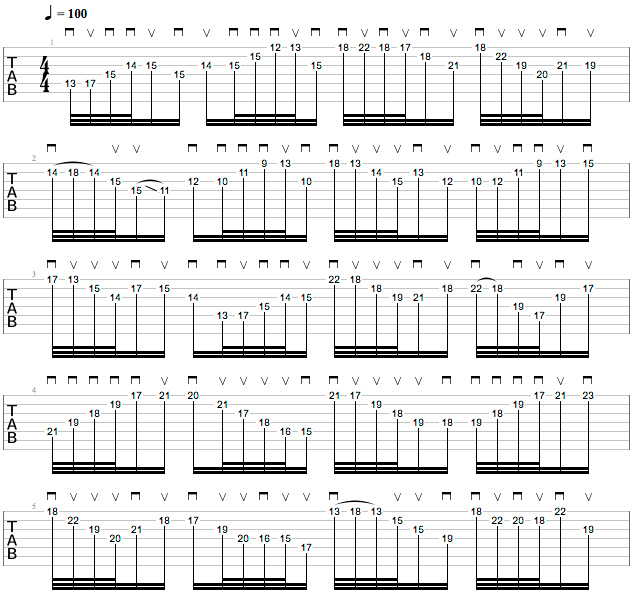
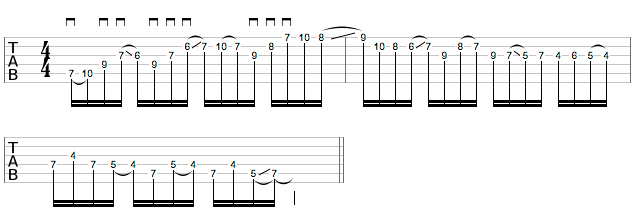
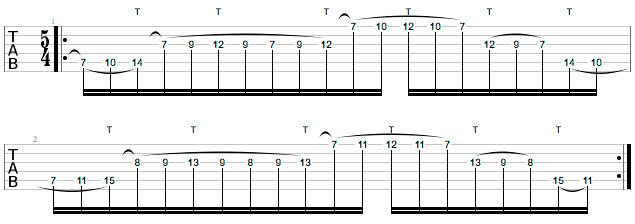
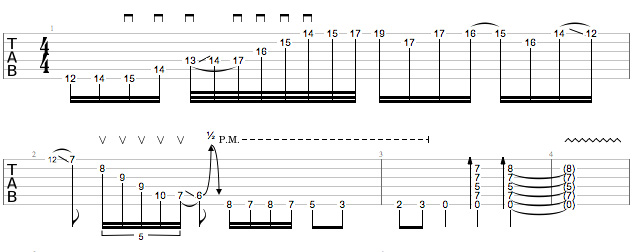
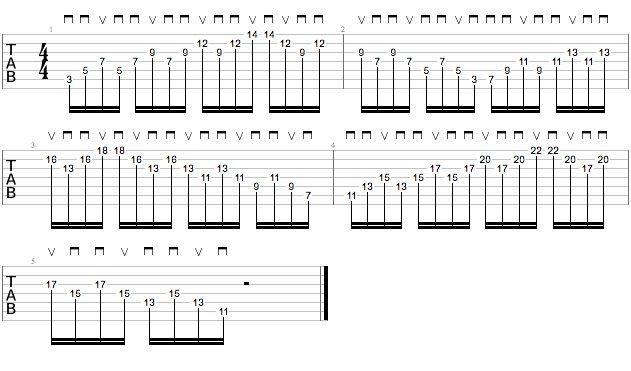
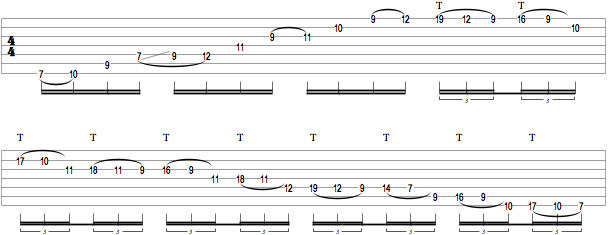
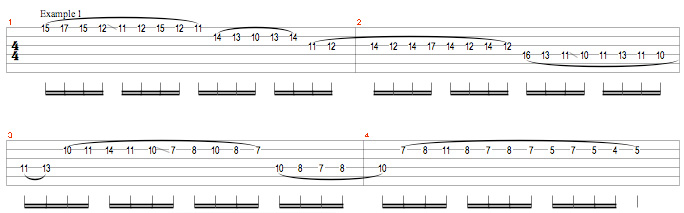
So, what are arbitrary chromatics? To say it simply, whenever you’re playing a minor (or major, or whatever mode) scale, in any position, you’ll have three tones on most of the strings, and two tones on one of the strings. This concept puts a chromatic passing tone on the string with two tones, so that each of the strings has three tones. This is great, especially for playing patterns or runs…


Auditioning For Lady Gaga Auditioning For Lady Gaga
By Ben Levin

June 21st, 2011

Dear Fellow Musicians, In January 2010 I had the opportunity to audition for the guitarist position on Lady Gaga’s international arena tour. I made it to the final 15 guitarists and learned a few valuable things about the music business, particularly the music world outside of Berklee. I think it is definitely worth reading this because the experience was fascinating. The audition opportunity fell on my lap by sheer luck. My brother’s girlfriend received the information from an acting forum she belongs to, and she passed the application information on to me so that I could submit. I emailed some… (Continue)


Rehearsal Tips From The Stars Rehearsal Tips From The Stars
By Bobby Borg

June 8th, 2011

It can be said that the key ingredient for a successful career in the music business is 5 percent inspiration and 95 percent perspiration. Whether you believe this statement to be true or not, most artists will agree that preparing for a live performance or tour, a phonograph recording session, or television appearance is serious business that requires hard work and discipline. A plan of attack is essential to ensure that time and money is spent most efficiently. I interviewed three name-brand artists who give tips and advice about their rehearsal techniques: what works for them—and what does not. Our… (Continue)


Tapping In Harmony Tapping In Harmony
By Faze

May 24th, 2011

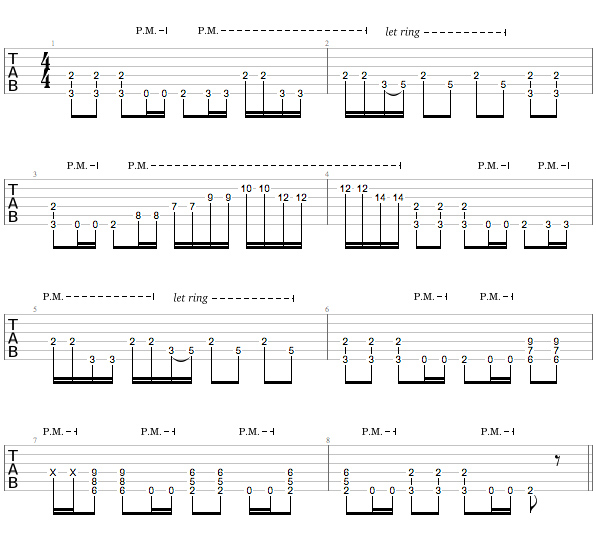
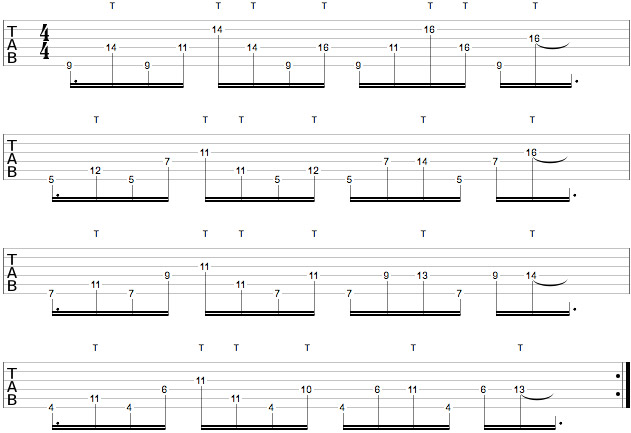
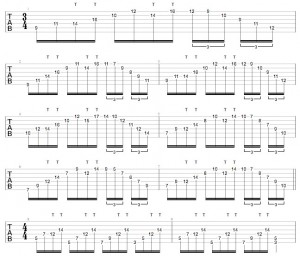
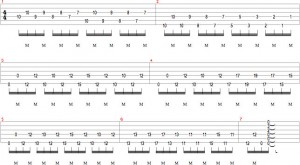
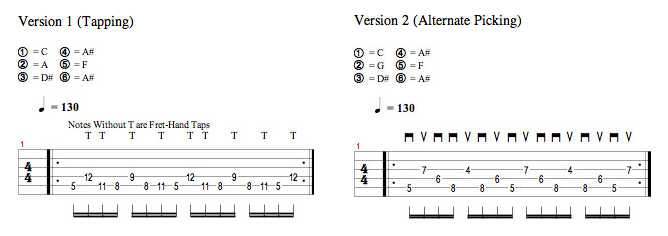
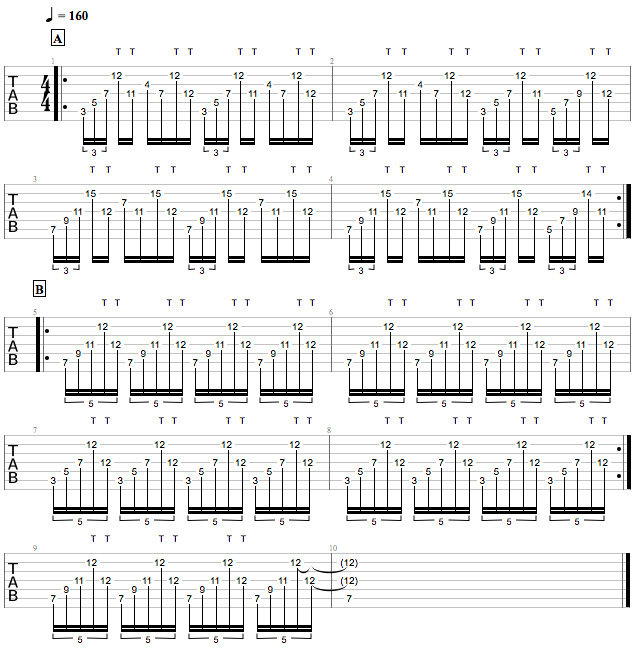
Hello Guitar Messenger readers! Today’s lesson focuses on spicing up chords by actively engaging both hands on the fretboard. Don’t be fooled by all the crazy-looking tapping you see in this video – as we move on you’ll realize that this is all a piece of cake. The main thing that I suggest here is to start slow and work your way up. I have provided you with full tracks and backing tracks of the full piece at 160bpm in the beginning, along with versions at 100bpm alongside each exercise, to help you build up to that speed. A few words before… (Continue)


Future Metal Shred Future Metal Shred
By Paul Wardingham

May 16th, 2011

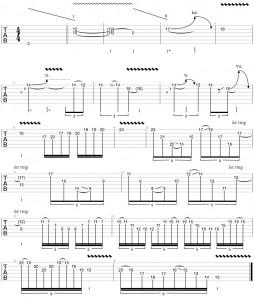
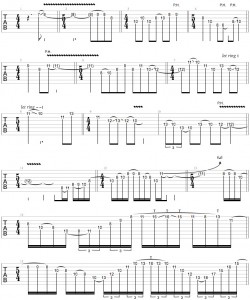
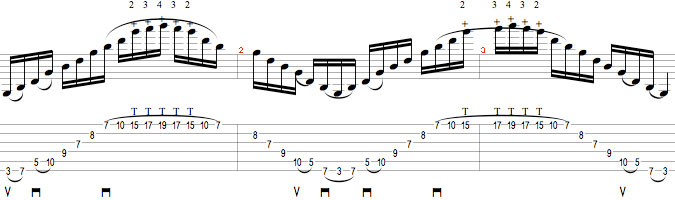
Welcome to Guitar Messenger! My name is Paul Wardingham, and I’m going to be showing you how to play some futuristic-themed shred ideas using excerpts from my new album Assimilate Regenerate, as well as a solo written and recorded exclusively for this lesson. Whenever a student asks me how to play so-called ‘futuristic’ sounding licks, there are certain techniques and scales that always seem to spring to mind when trying to create this sound. Ex 1. Sweeping Sus2 Arpeggios – Cyber Warfare (4:31) Example 1 is taken from the last solo in the track ‘Cyber Warfare,’ and uses a sequence of… (Continue)


Extended Range Composition Extended Range Composition
By David Maxim Micic

May 7th, 2011

Hey everyone! I’m David – guitar player, composer and producer for the band Destiny Potato. In this lesson I will show you the tuning that I use on my 6-string guitar along with some useful tips on how to create/compose interesting sounding riffs. I’ll also be playing a small solo section from my instrumental song ‘Bilo: part III’ from my upcoming EP Bilo at the end. GUITAR TUNING Since I’ve never had access to a 7-string guitar, I’ve adapted the tuning of a 6-string to give me access to the lower notes I want to use in my riffs. The… (Continue)


Creative Tapping Sequences Creative Tapping Sequences
By Stephen Ross

April 29th, 2011

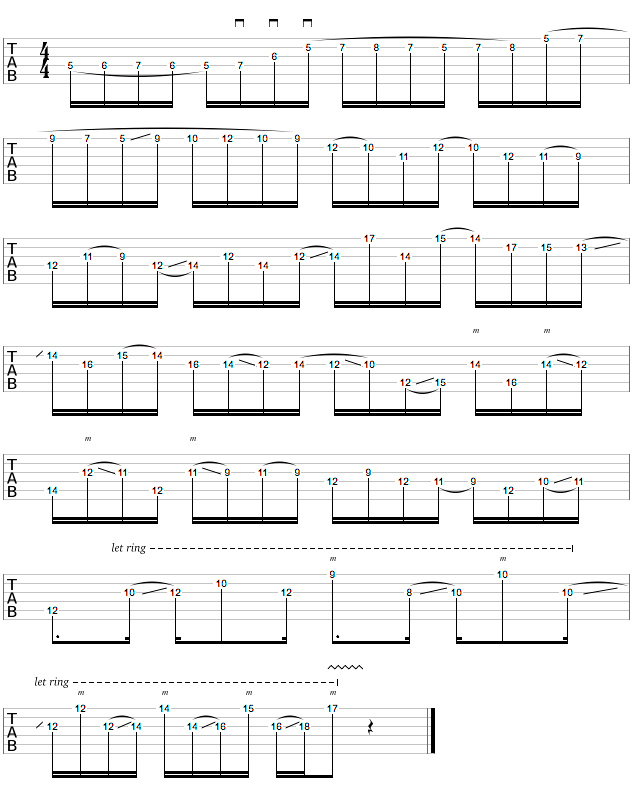
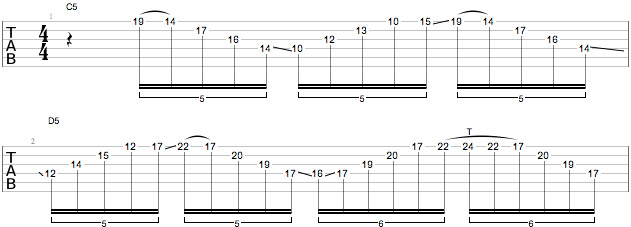
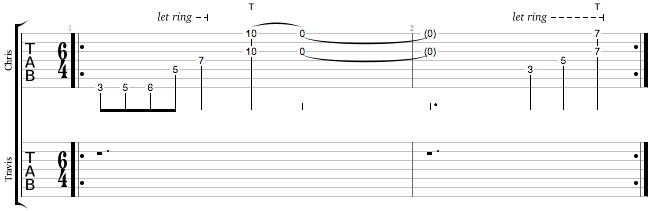
This lesson will explore tapping sequences that depart from the typical rock and metal patterns we all know and love. To drive this lesson, I will be extracting two sections from ‘Warp,’ the unaccompanied solo from my debut Shrapnel release Midnight Drive. All examples involve hammer-ons from nowhere in the left hand. The first three examples use the right hand’s middle finger to tap out notes, while the last three use the first and third fingers. I like using the middle finger for the single taps because I hold the pick in between my index finger and thumb. Using the… (Continue)


Sweeping Harmony Sweeping Harmony
By Jarle H. Olsen

April 22nd, 2011

I’m going to break down a segment of my song ‘Event Horizon,’ from my album Quadrasonic, for you to check out and study. For me, good composition always comes before anything else. I always try to paint the whole picture using all of the instruments. With this segment, I have added a lot of detail to the rhythm section and the chords underneath – otherwise it would just sound like a meaningless arpeggio sequence. What happens when you put all the elements of this arrangement in context is that the picture is completed, creating a strong melodic sense that sticks… (Continue)


Metal Foundations Lesson 2: Riff Concepts Metal Foundations Lesson 2: Riff Concepts
By Zach Pino

April 3rd, 2011

Welcome back, fellow metallers! Last lesson, I introduced some basic rhythmic subdivisions and the palm muting technique. Expanding on palm muting and timing importance, this lesson will examine some ways to go about creating original riffs with common chord diads, rhythmic embellishments, and knowing when and when not to palm mute. Common Diads – Perfect 5th, Perfect 4th, Major 3rd, Minor 3rd, Minor 6th The following examples illustrate common chord diads based in the key of D. Two-note chords are great for adding tonal variation to your riffs. Diads are not full chords, but the intervals relative to the root… (Continue)


Fusion Licks That Rock Fusion Licks That Rock
By Murilo Romano

March 29th, 2011

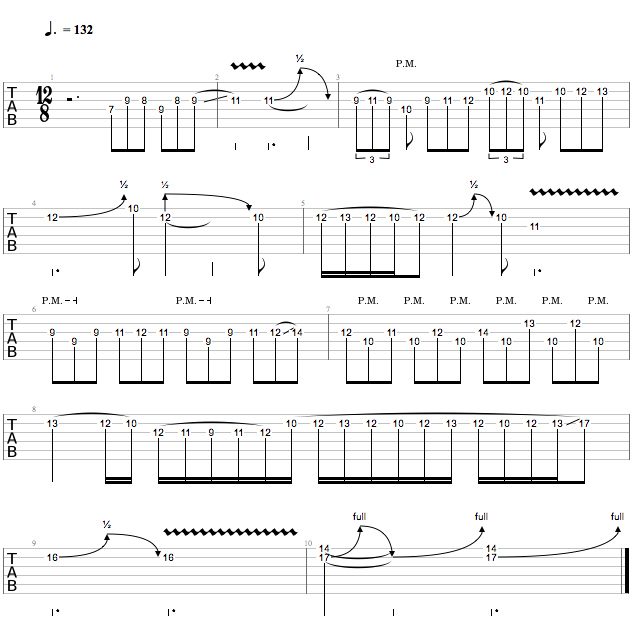
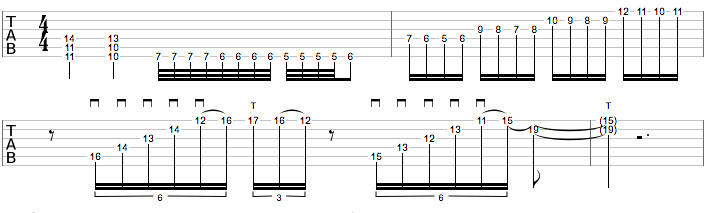
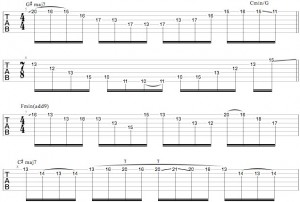
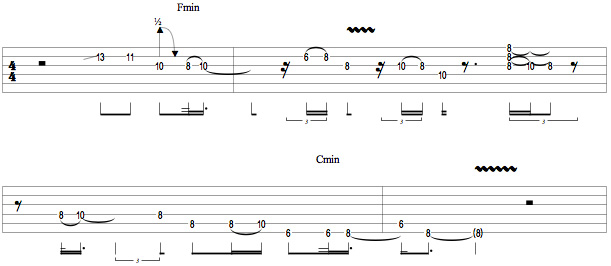
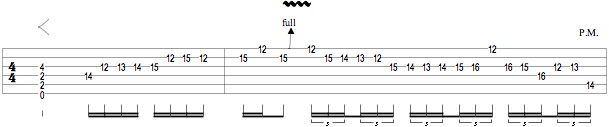
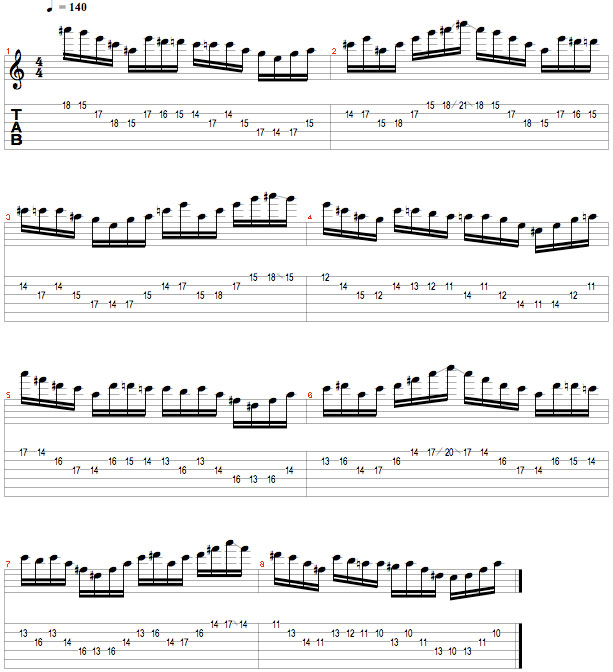
Hi, my name is Murilo Romano. It’s a great pleasure to be here with you! Today I’ll be using the solo from my song ‘Nostradamus’ to show you how to use chromatic approaches, arpeggios and tensions to give your licks an ‘outside’ sound.


20 Tips: How To Choose Your Next Record Producer 20 Tips: How To Choose Your Next Record Producer
By Bobby Borg

March 7th, 2011

The most important thing to a musician is the music that you create. You spend years developing a distinctive sound and style before finally getting the opportunity to record your first album professionally. All the hard work you’ve put into creating a unique, original sound, however, may not be enough to create a successful record. Producing a great album is an art form in itself, and it requires the assistance of an experienced professional producer—a producer can actually make or break your career. The right collaboration can take you to creative places you never imagined, but the wrong one can be… (Continue)


Putting Jazz In Metal With Ever Forthright Putting Jazz In Metal With Ever Forthright
By Nicholas Llerandi

February 17th, 2011

Welcome to Guitar Messenger! I’m Nick from the band Ever Forthright. Today we’re going to use excerpts from two of our recent songs, ‘The Counter Shift‘ and ‘Dispose Of Your Optimism‘, to demonstrate how you can use jazz harmony and concepts in modern progressive metal. All examples are played on an 8-string in standard tuning: F# B E A D G B E Passing Tones – The Counter Shift 1:43: This section is a great example of using passing tones (labeled PT in the tabs) to connect chords in a riff or progression. This section is pretty much a ‘techy’ take… (Continue)


A Lesson On Tensions Part 2:  Putting the Voicings Into Action A Lesson On Tensions Part 2: Putting the Voicings Into Action
By Mark Kilianski

February 12th, 2011

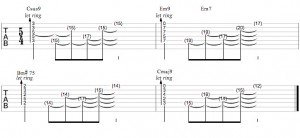
In my last lesson I bombarded you with tons of thick, gooey tension-filled voicings, and explained how they work. As we all know, with new knowledge comes new responsibility.  When and how should these voicings be used?  That’s an excellent question, so I’ll give you a couple of suggestions and show you how using tensions in your chord voicings can spice up some great jazz standards. Tensions are an important part of what makes Jazz harmony so rich and pretty.  In example 1A you can hear how 7th chords without any tensions sound in the timeless ‘There Is No Greater… (Continue)


Metal Foundations Lesson 1: Rhythm Guitar Development Metal Foundations Lesson 1: Rhythm Guitar Development
By Zach Pino

January 24th, 2011

What’s that? You want to learn some metal guitar? You’re a beginner, too? No way! You came to the right place, my friend. Welcome to the first lesson in this beginning metal guitar series. With these lessons, I will lay the foundations for developing solid and precise metal technique. Whether you’re a novice guitarist or just want to brush up on some technique, this series will offer beginner-intermediate exercises and concepts to help you on your way to metal mastery. With patience, practice and a decent electric guitar and amp, you’ll be chugging out brutal riffs in no time. If… (Continue)


Buying Your First Guitar: Part 2 Buying Your First Guitar: Part 2
By Zach Pino

November 9th, 2010

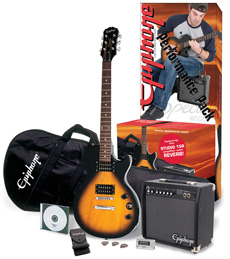
Welcome back! In Part 1 of this article, we looked at various considerations and research tips to guide your search for the right guitar. Now we will get into specifics with price ranges, accessories, and upgrade possibilities. Price Ranges/Value Packs Here are some guitars that fall into different price ranges for a beginner on a budget: $100-250 – Epiphone Les Paul Special, Ibanez RG120, Squier Telecaster Special, Squier Stratocaster Special, Dean Vendetta XM. In this price range, it’s best to go with a value package. Squier and Epiphone (the cheaper overseas companies for Fender and Gibson, respectively) offer great value… (Continue)


A Lesson On Tensions: Can You Paint With All the Colors of the Jazz Chord? A Lesson On Tensions: Can You Paint With All the Colors of the Jazz Chord?
By Mark Kilianski

October 28th, 2010

What’s so great about Jazz? What about that sound is so appealing?  Why should we as guitarists take the time to study Jazz, even if we do not intend to play jazz gigs?  Well, there are many answers, but one that really stands out, especially for us guitarists, is the rich harmonic sound of a Jazz chord voicing.  The chords that a Jazz player uses are denser and richer than those of most rock, pop, funk, and countless other styles of music, and so we will dive right into the warm, thick, colorful waters of tensions. From the beginning, Jazz… (Continue)


Buying Your First Guitar: Part 1 Buying Your First Guitar: Part 1
By Zach Pino

October 13th, 2010

Greetings to everyone at Guitar Messenger! I’m excited to have the opportunity to contribute to the Guitar Messenger community with this article. If you are a beginner who is thinking about buying your first guitar, you have come to the right place. Whether you have never picked up a guitar before or already know a few chords and riffs, I will point you in the right direction to making this important purchase. Ideally, you want to buy a guitar that will make you happy for years. You will be spending countless hours playing your instrument. You should buy a guitar… (Continue)


Basic Blues Substitutions Basic Blues Substitutions
By Dr. Matt Warnock

October 5th, 2010

Over the years I’ve found that while most guitarists have an easy time learning to comp and solo over the 12-bar blues, many people struggle when it comes time to expanding this well-known progression beyond the standard three chords. While there are many ways to apply chord substitutions to the 12-bar blues, I find that by applying one sub at a time, and keeping things simple, it’s easier to get these new chords under our fingers and in our ears. One of the first subs I teach within the context of a 12-bar blues is the #IV diminished 7th chord…. (Continue)


Ignition Part 1: Listening Ignition Part 1: Listening
By Jeremy Krull

September 28th, 2010

Now I know that since this is a recording column, naturally everyone wants to know what gear is good and what they should buy and who has good presets for this and that plugin…well there are more important matters at hand. If any of you remember, from the movie Conan The Barbarian, James Earl Jones’ character Thulsa Doom says at one point “What is steel, without the hand that wields it?!” and I’ll tell you why that makes the ultimate in sense. Obviously that’s a silly reference and an obscure one at that, but if you think about it…what sense… (Continue)


5 Tech Tools to Maximize Your Practice 5 Tech Tools to Maximize Your Practice
By Greg Arney

September 19th, 2010

The metronome, invented in 1812, sounded the first four even beats of a new era for music technology. Since the onset of the digital age, recording and performance have changed dramatically. Listeners who are accustomed to hearing the post-human sounds of modern recordings have expectations of music performance which are not based on reality but on technological edits – both live and in the studio. The tech-savvy musician can use the tools available to augment his or her abilities and to practice in ways that were previously impossible. To ensure musical development, it’s important to use these tools but not… (Continue)


The Almighty ii-V:  Part 2 (Minor) The Almighty ii-V: Part 2 (Minor)
By Mark Kilianski

September 7th, 2010

Sultry.  Spicy.  Rich.  Exotic.  No, I am not talking about your mother.  I’m talking about Jazz standards in minor keys.  Though they make up a smaller percentage of the Jazz repertoire, minor tunes add a great variety and sound to any performance, album, or jam session.  Even if the tune you are playing is in a major key, there’s probably at least a hint of minor in there.  And if it’s Jazz it’s probably got a ii-V in it.  This article will focus on playing over a ii-V progression in minor keys. The ii chord in a minor key is… (Continue)


Tour Survival 101 Tour Survival 101
By Marcel Hamel

June 30th, 2010

I remember it perfectly. It was 19 weeks ago that I arrived in Manhattan, guitar in hand, frantically looking for Chelsea Studios. Chelsea is one of the larger theatrical rehearsal studios in New York City and while I’d played in a number of pit orchestras before, I’d also never had any reason to find the place because I wasn’t an actor. Today was different. Today I’d be meeting thirty other actors and musicians to depart for the national tour of the musical Cabaret. My contract was signed, I’d learned my parts and done my best to prepare for the next… (Continue)


Altered Dimensions:  The Altered Dominant Chord Altered Dimensions: The Altered Dominant Chord
By Mark Kilianski

June 14th, 2010

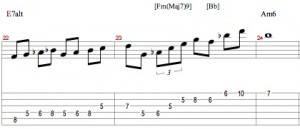
The Altered Scale. Sound scary? Well it is. It’s a 20 story tall, fire-breathing beast with enough tension in it to break the entire universe into infinite little pieces and eat them all in one bite. But that’s why it’s so great. If you learn to tame this beast it can add a hip, sophisticated, and wild edge to your playing, and is relevant beyond the scope of Jazz music alone. And it’s actually not that hard once you get used to it. The altered scale came about in the Bebop era of Jazz when musicians were exploring new harmonic… (Continue)


Create Marketing Tools Create Marketing Tools
By Bobby Borg

April 10th, 2010

Creating marketing tools (A.K.A “Merch”—T-shirts, hats, and stickers that bear your name, logo or slogan) help to increase your exposure, strengthen your brand name, and provide an ancillary form of income. Merch is one of your best sources of promotion since it continues to “speak” for you (or “expose” you) even when you’re not present. A fan wearing one of your T-shirt designs to school can stimulate interest and get people talking. Multiply this by ten, another ten, and then another ten. It’s essentially like having an army of walking billboard advertisements around your hometown, and the best part is,… (Continue)


Guitar Tone: Body Woods Guitar Tone: Body Woods
By Pasquale Campolattano

March 24th, 2010

Today we’ll discuss the piece of your guitar which many believe has the biggest influence on your sound – one which is a huge deciding factor for many folks when purchasing a new instrument. I am talking of course about the body wood of your guitar. Body wood plays a role in the sound of all guitars, but in this segment I will be speaking specifically about electric solid body guitars. A lot of players have a general idea of what a particular wood may sound like, but bear in mind that body wood alone is not the biggest factor in… (Continue)


Red Light District Red Light District
By Jeremy Krull

March 7th, 2010

Hello readers, if you’ve stumbled upon this then I guess you’re somewhat interested in the wide (and very confusing) world of audio production/recording. Throughout this series of columns we will touch on many different aspects of recording, from good equipment to start out with to methodology, to mixing, and many other small things along the way. In this introductory column we’ll glance over some of the very basic principles and ideals of recording/music production. And, before I forget, and I cannot stress this enough, this is about your ears, first and foremost. All for you? A rough estimate would be… (Continue)


Harmonic Overlapping Harmonic Overlapping
By Juliano Augusto

February 24th, 2010

I first came about Harmonic Overlapping when studying the formation and inversion of chords, a subject that quickly became an obsession of mine. The idea of Harmonic Overlapping (a term I coined for lack of a better word) hit me when I realized that an Am7 chord (A C E G) was not only an inversion of a C add13 (C E G A), but a fusion of a C major chord and an A minor chord. Harmonic Overlapping is, in essence, simply that: the superimposition of two or more chords or intervals, diatonic or not (also known as polychord). This… (Continue)


No 800 Numbers No 800 Numbers
By Bobby Borg

February 23rd, 2010

Quit waiting for magic potions and 1-800 numbers to success. Put together a plan and get your work ethic in check! In order to attract serious interest in the music industry today—whether it be from a record label, publishing company, manager or attorney—independent artists (yes, that means you) must be proactive about their careers and accomplish a great deal on their own first. This includes building a strong buzz through live performances, press, and online marketing, as well as selling a respectable number of CDs. However, with no organized plan of attack or blue-print in place, many artists fall short… (Continue)


The Almighty ii-V: Part 1 (Major) The Almighty ii-V: Part 1 (Major)
By Mark Kilianski

February 9th, 2010

The ii-V. All hail the ii-V. Never question it. Accept it. Embrace it. And then once you’re sick of it you can puke it out all over the place. The ii-V-I progression is the most important chord progression in Jazz music, equitable with I-IV-V in Pop music. There are tunes with harmony constructed solely on the ii-V, and it appears in about 85% of the standard repertoire. So if you want to play Jazz, then it’s a good idea to get to know this guy. He’ll get you a long way. Let’s figure out how to construct, play, and play… (Continue)


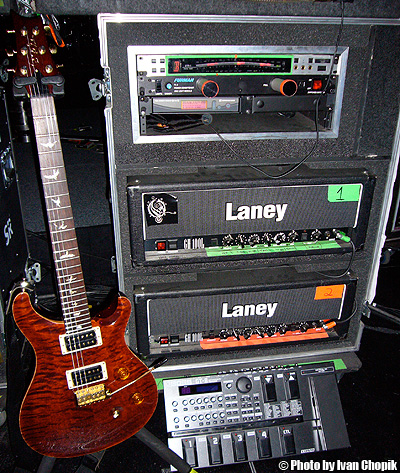
Steve Morse Bonus: Gear Gallery Steve Morse Bonus: Gear Gallery
By admin

October 20th, 2009

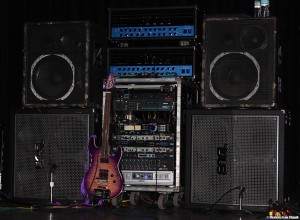
Come take a look at Steve Morse’s live rig from his Out Standing In Their Field tour with the Steve Morse Band. These pictures were taken on October 20th, 2009 in Boston, Massachusetts.


How To Make A Kick-Ass Video How To Make A Kick-Ass Video
By Bobby Borg

March 1st, 2009

Just mention the word “video” and most of us think of those high-priced MTV videos only top artists can get played. This reminds me of my first band’s video, which cost about $200,000, and got aired like four times. That equates to $50,000 a spin. [Laughing!] What a waste! There’s a right time and a wrong time to get a video made. For many artists, the right time is after they’re signed, getting some “love” at radio, and have a hit. However, with advances in technology today, there are a number of opportunities to record a decent-looking video for next… (Continue)


Diminished Possibilities: Part 2 Diminished Possibilities: Part 2
By Francesco Artusato

February 21st, 2009

Hey guys! Welcome again to my “Technical Difficulties” column – this is number 6 already! As the title suggests, this is the second part of a previous column I wrote for Guitar Messenger, so feel free to check it out and leave me comments in the “Ask Francesco” section of the forum. This time I am going to dive a little deeper into the Octatonic scale. I want to show you some of the sounds “hidden” inside the typical diminished shapes that all guitar players know and have come to love and use on a consistent basis. It is really… (Continue)


Social Networking vs. Business Networking Social Networking vs. Business Networking
By Bobby Borg

December 2nd, 2008

An open-ended letter to a friend on the topic of Social Networking versus Business Networking in the music industry [Editor's Note: The views expressed are solely those of the author and do not reflect the views of GUITAR MESSENGER, its affiliates, or its sponsors. The below article contains adult themes and language. If this offends you, please exit this page. The names used in this article are fictitious in order to protect the identity of the mentioned persons.] Amy, I can tell that you didn’t like my email response to your previous question. But just remember, YOU asked ME for… (Continue)


Scott Henderson’s “Stella by Infra-Red High Particle Neutron Beam” Solo Scott Henderson’s “Stella by Infra-Red High Particle Neutron Beam” Solo
By Francesco Artusato

September 25th, 2008

Welcome back to the Technical Difficulties column! As I previously did with the “Day of the Dead” solo by Allan Holdsworth, today I am going to analyze and play a solo by one of my favorite guitar players of all time: Scott Henderson. Scott is a phenomenal musician who has widely expanded the guitar language throughout the years, particularly in the jazz/fusion and blues context. He is known especially for his great sense of phrasing, touch, dynamic control, amazing time, and incredible attention for articulations. He has been recording and playing around the world in different collaborations and projects for… (Continue)


Using a Metronome Effectively Part 4: Being One With the Tick Using a Metronome Effectively Part 4: Being One With the Tick
By Matt Baamonde

September 18th, 2008

So you’ve got your metronome – (Part 1) – check. You understand the basics of rhythmic notation – (Part 2) – check. And now you’ve got a great warm up and know how to work moveable finger patterns in time – (Part 3) – check. Now its time to apply everything you’ve learned and use them to play some licks in a real musical situation. The following example is a minute long rock/metal/shred tune that features a medium/fast rock tempo and a series of sixteenth note runs in the G Phrygian mode. (If the modes are new to you, you… (Continue)


Team Players Team Players
By Bobby Borg

August 26th, 2008

If you’re a member of a band, set ground rules early in your relationship to prevent legal and financial problems down the road. Being a member of a band is not much different from being a member of a professional sports team. You’re part of a group of individuals united in the pursuit of a common goal, where each person plays a unique and integral part in achieving a dream. At least in theory, the motto is “All for one and one for all.” But unlike the sports world, where professional teams expect young athletes to meet extremely high standards… (Continue)


Opeth: Bonus – Mikael Åkerfeldt’s Gear Opeth: Bonus – Mikael Åkerfeldt’s Gear
By admin

May 30th, 2008

Take a backstage gear tour as Coty Allinson, Opeth’s guitar technician, walks us through frontman and mastermind Mikael Åkerfeldt’s live guitar rig.


2-1-2 Arpeggio Permutations 2-1-2 Arpeggio Permutations
By Francesco Artusato

May 22nd, 2008

Welcome to my fourth column/lesson. This time I would like to talk about a component of guitar playing that has always fascinated me: arpeggio permutations/fragments. Playing arpeggio fragments can make one’s playing more colorful, usually helping a musical phrase sound harmonically richer and more diverse.


Putting It Together: Playing Bass Lines & Guide Tones Simultaneously Putting It Together: Playing Bass Lines & Guide Tones Simultaneously
By Mark Kilianski

February 21st, 2008

It’s great to be able to play guide tones as a stripped down approach to comping, and it’s awesome to be able to play bass lines when a bass instrument isn’t covering the low end. Combining the two techniques yields a great way to comp in a setting devoid of another bass and chord instrument, such as a duo or trio without bass, piano, tuba, harp, accordion, or any other bass and/or chord instrument. The most basic way to do this is by playing a bass line and inserting guide tone stabs at certain points. Ex.1: All The Things You… (Continue)


Using a Metronome Effectively Part 3: Clocking Your Speed Using a Metronome Effectively Part 3: Clocking Your Speed
By Matt Baamonde

January 28th, 2008

So now that you’re set up with a quality metronome (Part 1) and understand the basics of how rhythmic time is divided, (Part 2) lets actually start applying some of it and learning some moving patterns. Notes on setup: Since we are ready to play examples, you will need your electric or acoustic guitar. I advocate an electric with an amplifier with an adjustable volume control. This way you can set your instrument’s volume slightly softer than the volume of your metronome. You’ll always want to start practicing without distortion. Think of a clean jazz tone… for you all you… (Continue)


Messiaen – Canteyodjaya [1949] Messiaen – Canteyodjaya [1949]
By Roberto Toscano

January 20th, 2008

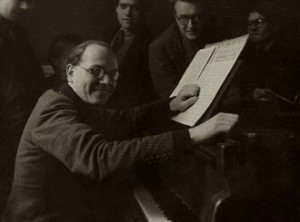
Welcome back to Beyond Theory and to what already is column #5! Today we will be talking about Hindu Rhythms as applied by Oliver Messiaen (1908-1992) in his composition titled Canteyodjaya (Solo Piano) – as well as going over a few other compositional techniques employed in this study. This work amounts to what is essentially a short (ca. 12 minutes) piece on Hindu rhythms, which Messiaen finished composing while visiting Tanglewood, MA in August 1949 (and not 1948 – as most sources state). You will notice that Messiaen will use authentic names for each rhythm in the piece, meaning he… (Continue)


Diminished Possibilities: Part 1 Diminished Possibilities: Part 1
By Francesco Artusato

January 9th, 2008

Welcome to my third column/lesson. This time I’d like to talk a little bit about diminished scales/arpeggios with their possible application solos. Knowing how to use a diminished “idea” represents a very powerful tool to create moments of musical tension. A diminished/octatonic scale is a symmetrical scale (whose intervallic relationship is symmetrical) composed of 8 notes. There are 2 modes of a given diminished/octatonic set: whole/half/whole/half and so on, or half/whole/half/whole and so on. It’s a very easy scale to use on an instrument like the guitar, because even though there are 8 notes in it, there are only two… (Continue)


Polyphonic Writing for Keyboard: Part 1 Polyphonic Writing for Keyboard: Part 1
By Roberto Toscano

January 4th, 2008

Hello and welcome back to Beyond Theory. In this column I would like us to get away from THEORY altogether and look closer at texturing and things approximate to the realm of composition. Over the course of the last few years I have come to realize that most people do not truly appreciate how versatile the piano can be when writing for it. By versatility I do not mean styles of music at all, but actually how the piano can be utilized to play many different lines and textures at the same time – its polyphonic capabilities. For the purpose… (Continue)


Down in the Basement: Constructing Bass Lines on Guitar Down in the Basement: Constructing Bass Lines on Guitar
By Mark Kilianski

January 3rd, 2008

As guitarists, our primary role in a jazz setting is to play chords, and very often we also play melody and/or solos. Because of our main function, it can be easy to overlook the usefulness of knowing how to construct a good bass line.


Advanced Tapping: Extended Arpeggios Advanced Tapping: Extended Arpeggios
By Bill Peck

January 1st, 2008

For many guys that want to tap better, they do not have the hand strength or built up dexterity to hammer onto the fretboard hard enough. You must hammer with some real power and try to be as accurate as possible in the placement of the hammering finger relative to the fret and adjacent strings.


Allan Holdsworth’s “Day of the Dead” Solo Allan Holdsworth’s “Day of the Dead” Solo
By Francesco Artusato

October 28th, 2007

Welcome to my second column/lesson! This month I’d like to talk about one of my favorite players of all time – Allan Holdsworth. He’s been a big influence in the electric guitar world, and has helped expand the musical vocabulary of countless players throughout the last three decades. Allan has always tried to push the physical and harmonic limits of his playing/instrument, and over the years has practically created his own language on the instrument and in the genre of fusion. Holdsworth represents everything that is good in the realm of guitar: from his impeccable time and touch, to his… (Continue)


Using a Metronome Effectively Part 2: Things Start to Click Using a Metronome Effectively Part 2: Things Start to Click
By Matt Baamonde

October 18th, 2007

Now that you know what to look for when you purchase a metronome (Part 1), let’s get started with actually practicing with one. A lot of this may be review for more advanced players, but you may want to skim through and see if there any rusty spots in your playing or knowledge. When you’re getting set up you’ll want to practice with a pick, and if you’re playing amplified, it’s better to practice clean before adding distortion so you can work on playing with clarity and precision that distortion can cover up. Old Joke: How do you send a… (Continue)


Using a Metronome Effectively Part 1: Nervous Tick? Using a Metronome Effectively Part 1: Nervous Tick?
By Matt Baamonde

October 17th, 2007

If you are a half capable guitarist you’ve probably heard the words, “Play something really fast,” by your friends, and it’s usually meant as a challenge to test your chops. But what does playing something fast really mean? Is someone clocking the amount of time it takes you to play x amount of notes from point A to point B? And even if you’re moving at the speed of sound is that really a valuable skill as a guitarist, or more importantly, as a musician? If you’ve ever listened to, or seen guitarists, that fall under the progressive rock, neoclassical… (Continue)


The Octatonic Scale & Symphony of Psalms (Stravinsky) The Octatonic Scale & Symphony of Psalms (Stravinsky)
By Roberto Toscano

October 17th, 2007

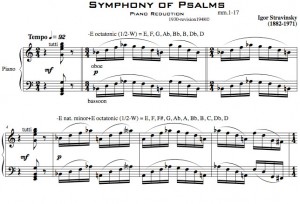
I mentioned in the introduction to this column that it was my goal to talk about certain topics that rarely get mentioned on guitar related sites, or for that matter any site that is out there. This will be the first such column that I write for this site, which essentially deals with one or more works by a composer, and deals with an application of a topic that is not common to most guitar players or at least is an expansion on certain things guitar players might have heard about but never understood or saw applied. For this column… (Continue)


Artist Management Artist Management
By Andy Zhang

October 16th, 2007

Managing your career can be a daunting task. That’s why the artist management profession exists! If you actually break down what a manager does, you start to see that he/she has to do a little bit of everything. For those of you who are unsigned or simply don’t plan on signing with a label, a manager then must do a lot of everything in order to compensate.If your band is just starting out, the following article may not apply to you yet; you should be playing out quite often and have a solid original repertoire to warrant the need for… (Continue)


Minor Scale Harmony Minor Scale Harmony
By Roberto Toscano

October 16th, 2007

In the last column we talked about harmonizing the Major Scale in 3rds so that we could find all diatonic chords for that scale from each of its degrees. In doing so we ended up harmonizing every degree of that scale until we had every possible diatonic tension stacked on all of the seven degrees of said scale. For this column the goal will be much the same. We will continue with the tertian harmonization and apply it to natural minor, melodic minor, and finally harmonic minor scales. What will happen is that we will then have seven different chord… (Continue)


Guide Tones: The Bare Essentials Guide Tones: The Bare Essentials
By Mark Kilianski

October 15th, 2007

Very often, “less is more” is a good policy to adopt when playing jazz. Overplaying usually gets both players and listeners pissed off because you’re getting in the way of the other musicians, while creating cluttered, disorganized music.


Major Scale Harmony Major Scale Harmony
By Roberto Toscano

October 15th, 2007

For this first column, I feel its best that we start off with something simple. The purpose of this column is to show which chords can be derived from the Major Scale, how one would come to these said chords and what possible tensions can be applied to each chord while remaining diatonic to the “mother” scale. A few things to note: All examples can be transposed into any other key, though for the majority of this column I will be using C major as our primary scale, this will make the given information easier to digest. The harmonization applied… (Continue)


Different Groupings & Finger Independence Different Groupings & Finger Independence
By Francesco Artusato

October 15th, 2007

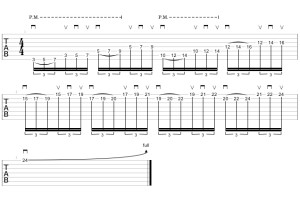
One of the most essential things that a guitar player can try to develop is the independence of fretting hand digits (equal control over every finger). There are lots of exercises that help to achieve this, and I think one of the best ones is the common 1-2-3-4 chromatic exercise across all strings. It can seem simple, but playing all the different permutations (1-2-3-4/1-2-4-3-/1-3-2-4/1-3-4-2/1-4-3-2/1-4-2-3/ and so on) with a balanced touch and good time while only using hammer-on’s and pull-off’s can be really demanding. In the long run, however, such control can be truly effective, and will open many doors… (Continue)