Metal Foundations Lesson 3: Intermediate Riff Concepts
Lessons > Basics
Metal Foundations Lesson 3: Intermediate Riff ConceptsBy Zach Pino
October 11th, 2011
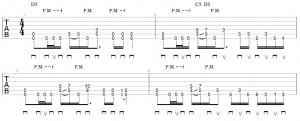
Welcome back, metal Guitar Messengers! The last lesson introduced you to some basic riff construction concepts based off of common chord diads and the palm muting technique. In this lesson, we’re going to dive right into some more advanced riff concepts. These include the use of tritones, bending techniques, and the use of palm-muted rests to create syncopated grooves. The riffs in this lesson are all in Drop D tuning, with the exception of Figure 3, which is in standard tuning. And as always, we’ll conclude the lesson with some essential metal albums that illustrate these concepts. Sound good? Let’s… (Continue)
Rehearsal Tips From The StarsBy Bobby Borg
June 8th, 2011
It can be said that the key ingredient for a successful career in the music business is 5 percent inspiration and 95 percent perspiration. Whether you believe this statement to be true or not, most artists will agree that preparing for a live performance or tour, a phonograph recording session, or television appearance is serious business that requires hard work and discipline. A plan of attack is essential to ensure that time and money is spent most efficiently. I interviewed three name-brand artists who give tips and advice about their rehearsal techniques: what works for them—and what does not. Our… (Continue)
Metal Foundations Lesson 2: Riff ConceptsBy Zach Pino
April 3rd, 2011
Welcome back, fellow metallers! Last lesson, I introduced some basic rhythmic subdivisions and the palm muting technique. Expanding on palm muting and timing importance, this lesson will examine some ways to go about creating original riffs with common chord diads, rhythmic embellishments, and knowing when and when not to palm mute. Common Diads – Perfect 5th, Perfect 4th, Major 3rd, Minor 3rd, Minor 6th The following examples illustrate common chord diads based in the key of D. Two-note chords are great for adding tonal variation to your riffs. Diads are not full chords, but the intervals relative to the root… (Continue)
Metal Foundations Lesson 1: Rhythm Guitar DevelopmentBy Zach Pino
January 24th, 2011
What’s that? You want to learn some metal guitar? You’re a beginner, too? No way! You came to the right place, my friend. Welcome to the first lesson in this beginning metal guitar series. With these lessons, I will lay the foundations for developing solid and precise metal technique. Whether you’re a novice guitarist or just want to brush up on some technique, this series will offer beginner-intermediate exercises and concepts to help you on your way to metal mastery. With patience, practice and a decent electric guitar and amp, you’ll be chugging out brutal riffs in no time. If… (Continue)
Buying Your First Guitar: Part 2By Zach Pino
November 9th, 2010
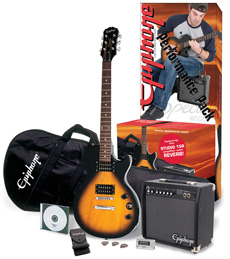
Welcome back! In Part 1 of this article, we looked at various considerations and research tips to guide your search for the right guitar. Now we will get into specifics with price ranges, accessories, and upgrade possibilities. Price Ranges/Value Packs Here are some guitars that fall into different price ranges for a beginner on a budget: $100-250 – Epiphone Les Paul Special, Ibanez RG120, Squier Telecaster Special, Squier Stratocaster Special, Dean Vendetta XM. In this price range, it’s best to go with a value package. Squier and Epiphone (the cheaper overseas companies for Fender and Gibson, respectively) offer great value… (Continue)
Buying Your First Guitar: Part 1By Zach Pino
October 13th, 2010
Greetings to everyone at Guitar Messenger! I’m excited to have the opportunity to contribute to the Guitar Messenger community with this article. If you are a beginner who is thinking about buying your first guitar, you have come to the right place. Whether you have never picked up a guitar before or already know a few chords and riffs, I will point you in the right direction to making this important purchase. Ideally, you want to buy a guitar that will make you happy for years. You will be spending countless hours playing your instrument. You should buy a guitar… (Continue)
Basic Blues SubstitutionsBy Dr. Matt Warnock
October 5th, 2010
Over the years I’ve found that while most guitarists have an easy time learning to comp and solo over the 12-bar blues, many people struggle when it comes time to expanding this well-known progression beyond the standard three chords. While there are many ways to apply chord substitutions to the 12-bar blues, I find that by applying one sub at a time, and keeping things simple, it’s easier to get these new chords under our fingers and in our ears. One of the first subs I teach within the context of a 12-bar blues is the #IV diminished 7th chord…. (Continue)
Ignition Part 1: ListeningBy Jeremy Krull
September 28th, 2010
Now I know that since this is a recording column, naturally everyone wants to know what gear is good and what they should buy and who has good presets for this and that plugin…well there are more important matters at hand. If any of you remember, from the movie Conan The Barbarian, James Earl Jones’ character Thulsa Doom says at one point “What is steel, without the hand that wields it?!” and I’ll tell you why that makes the ultimate in sense. Obviously that’s a silly reference and an obscure one at that, but if you think about it…what sense… (Continue)
5 Tech Tools to Maximize Your PracticeBy Greg Arney
September 19th, 2010
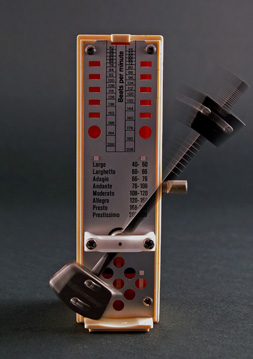
The metronome, invented in 1812, sounded the first four even beats of a new era for music technology. Since the onset of the digital age, recording and performance have changed dramatically. Listeners who are accustomed to hearing the post-human sounds of modern recordings have expectations of music performance which are not based on reality but on technological edits – both live and in the studio. The tech-savvy musician can use the tools available to augment his or her abilities and to practice in ways that were previously impossible. To ensure musical development, it’s important to use these tools but not… (Continue)
Tour Survival 101By Marcel Hamel
June 30th, 2010
I remember it perfectly. It was 19 weeks ago that I arrived in Manhattan, guitar in hand, frantically looking for Chelsea Studios. Chelsea is one of the larger theatrical rehearsal studios in New York City and while I’d played in a number of pit orchestras before, I’d also never had any reason to find the place because I wasn’t an actor. Today was different. Today I’d be meeting thirty other actors and musicians to depart for the national tour of the musical Cabaret. My contract was signed, I’d learned my parts and done my best to prepare for the next… (Continue)
Using a Metronome Effectively Part 4: Being One With the TickBy Matt Baamonde
September 18th, 2008
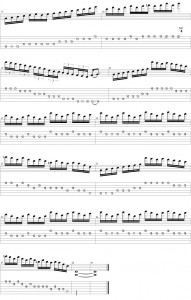
So you’ve got your metronome – (Part 1) – check. You understand the basics of rhythmic notation – (Part 2) – check. And now you’ve got a great warm up and know how to work moveable finger patterns in time – (Part 3) – check. Now its time to apply everything you’ve learned and use them to play some licks in a real musical situation. The following example is a minute long rock/metal/shred tune that features a medium/fast rock tempo and a series of sixteenth note runs in the G Phrygian mode. (If the modes are new to you, you… (Continue)
Using a Metronome Effectively Part 3: Clocking Your SpeedBy Matt Baamonde
January 28th, 2008
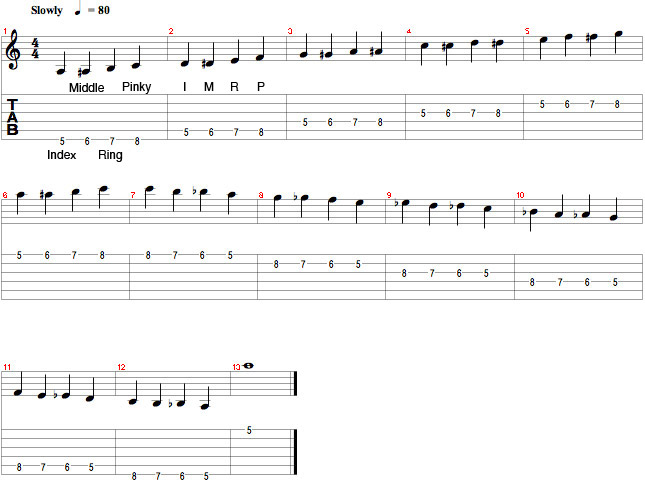
So now that you’re set up with a quality metronome (Part 1) and understand the basics of how rhythmic time is divided, (Part 2) lets actually start applying some of it and learning some moving patterns. Notes on setup: Since we are ready to play examples, you will need your electric or acoustic guitar. I advocate an electric with an amplifier with an adjustable volume control. This way you can set your instrument’s volume slightly softer than the volume of your metronome. You’ll always want to start practicing without distortion. Think of a clean jazz tone… for you all you… (Continue)
Using a Metronome Effectively Part 2: Things Start to ClickBy Matt Baamonde
October 18th, 2007
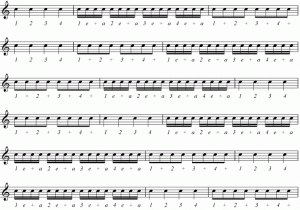
Now that you know what to look for when you purchase a metronome (Part 1), let’s get started with actually practicing with one. A lot of this may be review for more advanced players, but you may want to skim through and see if there any rusty spots in your playing or knowledge. When you’re getting set up you’ll want to practice with a pick, and if you’re playing amplified, it’s better to practice clean before adding distortion so you can work on playing with clarity and precision that distortion can cover up. Old Joke: How do you send a… (Continue)
Using a Metronome Effectively Part 1: Nervous Tick?By Matt Baamonde
October 17th, 2007
If you are a half capable guitarist you’ve probably heard the words, “Play something really fast,” by your friends, and it’s usually meant as a challenge to test your chops. But what does playing something fast really mean? Is someone clocking the amount of time it takes you to play x amount of notes from point A to point B? And even if you’re moving at the speed of sound is that really a valuable skill as a guitarist, or more importantly, as a musician? If you’ve ever listened to, or seen guitarists, that fall under the progressive rock, neoclassical… (Continue)